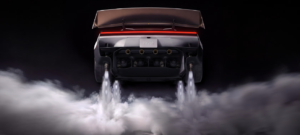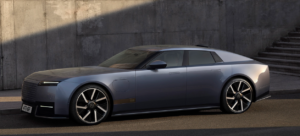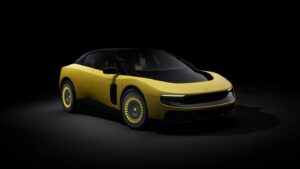
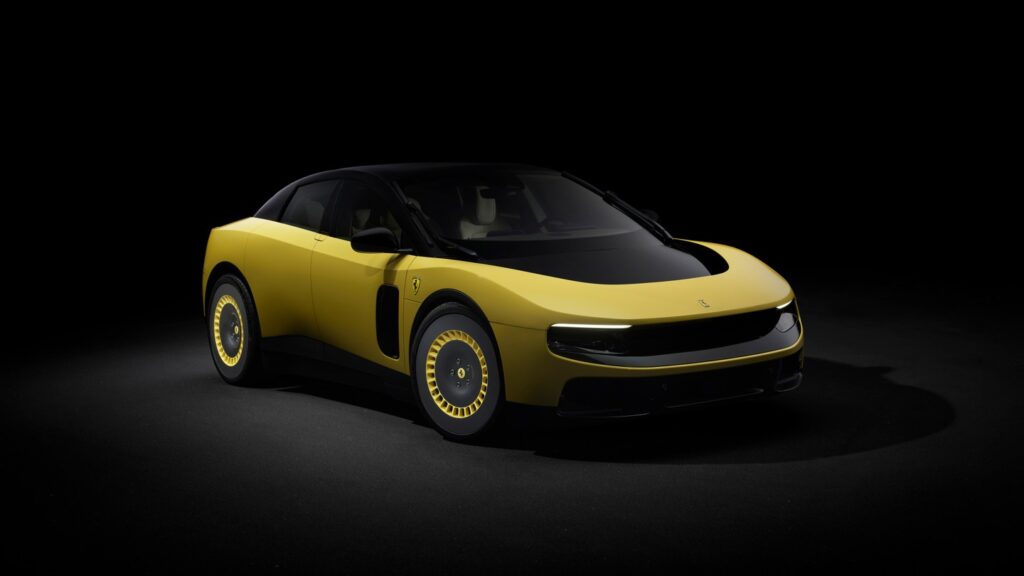
For more than a decade, Ferrari swore it would never go fully electric. Now it has. The result is the Luce, a €550,000 four-door electric sedan that drove onto a stage in Rome on May 25, sent the company’s stock down 8% the next day, and triggered a backlash wide enough to drag in the former chairman and Italy’s transport minister. Pope Leo XIV got a test drive. The internet got memes comparing the car to a cordless vacuum cleaner.
This is not how legacy auto launches are supposed to go. Especially not Ferrari ones.
The “Never” That Wasn’t
The Luce arrives carrying the weight of every Ferrari executive who promised this day would never come. In 2010, then-chairman Luca di Montezemolo told Engadget plainly: “You will never see a Ferrari electric, because I don’t believe in electric cars.” In 2019, then-CEO Louis Camilleri told analysts he didn’t expect Ferrari to be even 50% EV “in my lifetime.” The line was consistent for over a decade. Ferrari is an emotional product. Electric is a numbers product. The two will never meet.
Then 2022 happened. Under new CEO Benedetto Vigna, Ferrari announced that 80% of its lineup would be electric or hybrid by 2030, with the first fully electric model due in 2025. The U-turn was framed as evolution rather than reversal, but the math was clear. Regulatory pressure in Europe, the rise of EV-native competitors in China, and a generation of wealthy buyers who grew up on Teslas had made “never” commercially untenable.
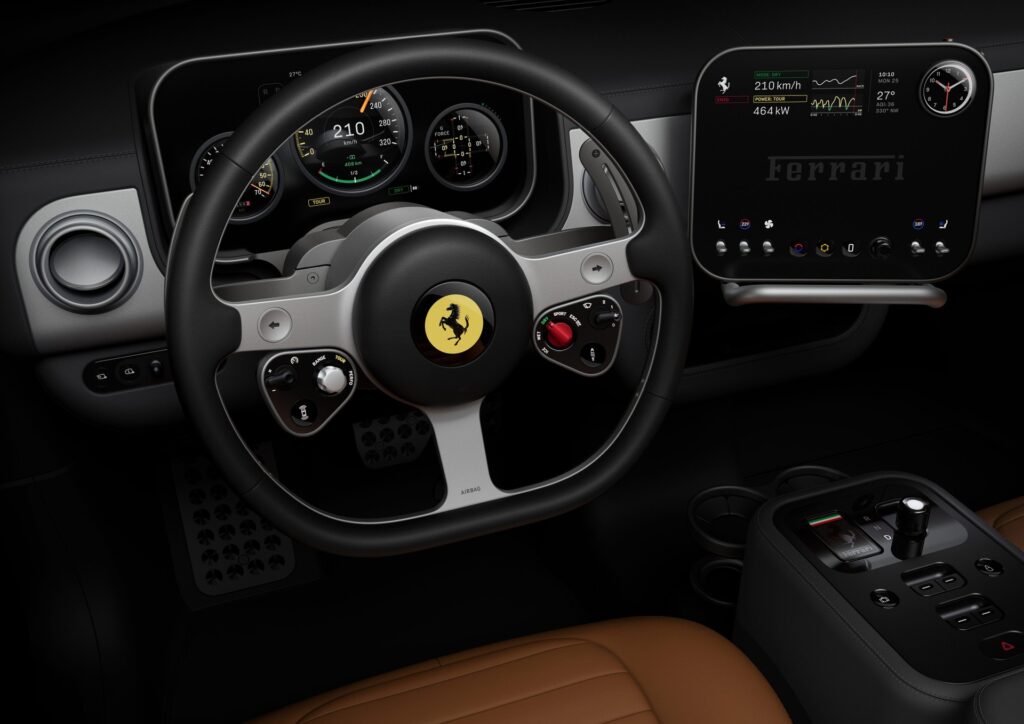
The Luce is the result. Four electric motors, one per wheel. Over 1,000 horsepower. Top speed beyond 310 km/h. Range above 500 km. A 600-liter trunk. Five seats, four doors. An interior designed by Jony Ive’s LoveFrom that looks like a MacBook Pro you can sit inside. By every spec on paper, this is a serious car.
By every emotion in the room, it isn’t a Ferrari.
What Jony Ive Built (and What He Got Wrong)
Ferrari handed creative direction to Jony Ive, the designer behind the iPhone, the iMac, and the visual language that defined consumer electronics for two decades. On a phone, Ive’s restraint is genius. On a Ferrari, restraint is the opposite of the assignment.
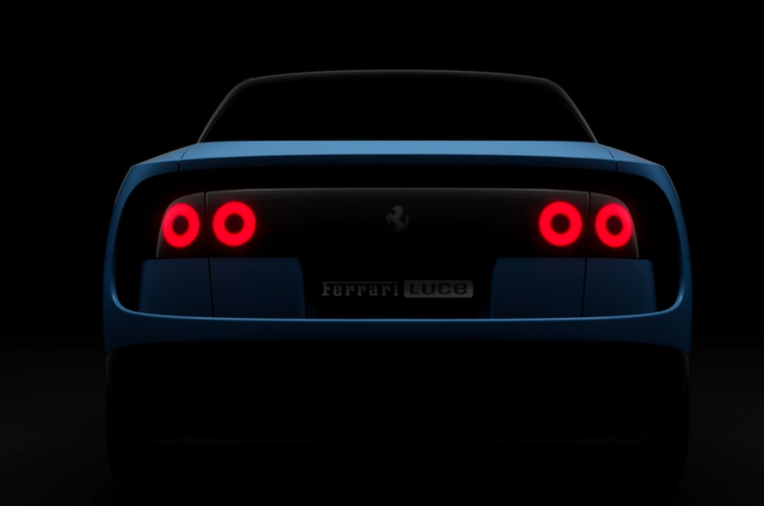
The Luce’s silhouette is tall, glass-heavy, and quiet. It has none of the muscular wedge shapes that announce “this car costs more than a house” from fifty meters away. Critics on social media said it looks like a refined Hyundai Ioniq. Former chairman Montezemolo said Ferrari was “risking the destruction of a myth.” Italy’s transport minister said it “looks like anything but a car from the Prancing Horse.” Strip off the badges and most people couldn’t identify the brand. That’s a problem when 90% of what you sell is the badge.
The interior, in fairness, is genuinely beautiful. Brushed aluminum everywhere, restrained controls, a screen layout that finally treats luxury as the absence of clutter rather than the abundance of it. But interiors don’t go viral on Instagram. Exteriors do. And the exterior is what the world has been screenshotting for a week.
Where Ferrari Fumbled It (And Who Got It Right)
The strangest part isn’t that an EV Ferrari is hard to design. It’s that other companies, including ones that had never built a car before, have already shown it can be done with drama intact.
Rimac Nevera. A Croatian hypercar with 1,914 horsepower and a quad-motor architecture not unlike the Luce. Looks like a missile that learned to drive. Drama in every panel.
Yangwang U9. BYD’s halo electric supercar. Butterfly doors, scissor-aggressive front end, a body that jumps on hydraulic suspension. Chinese engineering at maximum theatrical volume.
Xiaomi SU7. This is the painful one. A consumer electronics company that had never built a car before launched a sedan that out-Porsches the Porsche Taycan visually, sells for a fraction of the price, and became the most-talked-about EV of 2024. Xiaomi cracked it on the first try.
Ferrari, with 77 years of design heritage, with Pininfarina DNA running through its history, with the most recognizable brand in motorsport, made a car that looks like a refined airport shuttle. Edmunds captured it best in their verdict: not ugly, just boring. And for Ferrari, boring is worse than ugly.
€550,000 For This
The price is roughly $640,000. For context, a fully loaded Porsche Taycan Turbo S, the closest spiritual rival, sits around $230,000. The Rimac Nevera, with documented Nürburgring credentials and nearly twice the horsepower, costs around €2.2 million but at least delivers a hypercar in return. The Luce sits in a price band where buyers expect either a hypercar’s pedigree or a flagship sedan’s presence. It delivers neither.
Vigna defended the number by saying customer interest has been strong, including from new super-wealthy clients. That may be true. Ferrari sales are typically capped to preserve exclusivity, so even modest demand will sell out the first production run. The harder question is what happens in year three, when the novelty fades and buyers start comparing the Luce against a Lucid Air Sapphire, a Mercedes EQS, or whatever Xiaomi releases next.
Why Ferrari Had No Choice
Here is the part nobody wants to say out loud. Ferrari probably knew this launch would be rough, and did it anyway.
The reason isn’t Tesla. It’s the simple fact that high-end auto product cycles run five to seven years. The Luce was greenlit around 2020, in the middle of the global EV consensus, when regulators were tightening and analysts were valuing carmakers on their electrification roadmaps. Porsche had IPO’d at a premium partly because of the Taycan story. Ferrari needed an EV narrative of its own to defend its luxury valuation multiple.
By 2025, the market had shifted. EV demand cooled in Europe. Porsche walked back its 80% EV target. The Taycan became one of Porsche’s worst-selling product lines and Porsche’s market cap halved from its 2023 peak. Lamborghini delayed its first EV to 2029. Aston Martin and Bentley pulled back. The mood in luxury auto turned hard against electrification.
But Ferrari was already five years in. The factory was built. The supply chain was committed. The U-turn was made and the U-turn could not be U-turned again.
The lesson from Porsche is cautionary, not inspirational. The Taycan launched in 2019 to genuine enthusiasm and gave Porsche a future-proof valuation story for a couple of years. Then sales dropped, profits compressed, and the company is now adding new gas-powered models to bring buyers back. If even Porsche’s well-executed early EV bet has soured, Ferrari’s late and oddly-styled entry is on harder ground from day one.
What Happens Next
Ferrari has already cut its 2030 EV target from 40% of lineup down to 20%, which is the closest thing to a public admission that the original bet was sized wrong. The Luce will sell. First-run Ferraris always sell. The harder question is whether Maranello can iterate fast enough to make the second EV look like a Ferrari, not an Apple product, before the brand starts to bleed credibility with the buyers who built it.
For now, the Luce stands as a reminder that even the world’s most powerful luxury brand can fumble a launch when it lets a phone designer pick the proportions. The Prancing Horse is supposed to scream. It just whispered, in five colors, on a stage in Rome.