Tesla didn’t just reveal a car last night. It drove one up a wall, flipped it upside down and landed it with rocket-style thrusters.
On October 15, 2026, at SpaceX’s test site in McGregor, Texas, the new Tesla Roadster accelerated up a curved ramp. Fans underneath sucked it onto the surface until it was fully inverted. Then cold-gas thrusters, developed with SpaceX, fired it off the ramp. It flipped mid-air, righted itself and landed on the pavement below.
And that was just the opener. In a second stunt, the Roadster jumped over a line of Teslas, including a Cybertruck and a Semi, flipped again and came down on the other side. Musk’s reaction? “Well, it worked.”
Before we get carried away, a few things to know. There was no driver inside during the stunts. Some outlets, like Autonocion, also point out that the big ramp sequence was shown as video, and the car only appeared live on stage afterwards. Still, after nearly nine years of delays, Tesla finally gave us something to talk about.
So what exactly is this thing, why now, and is Tesla really selling us a flying car? Let’s break it down.
Tesla Roadster Specs, Trims and Price: Everything We Know
The new Roadster comes in three versions: Performance, Thrust and Rocket. All three are quoted with over 300 miles of range. Production is set to start in 2028, and Tesla hasn’t announced a final price for any of them.
| Trim | Seats | Key tech | 0-60 mph (claimed) | US reservation | Road legal? |
|---|---|---|---|---|---|
| Performance | 2 | Active aero, fan-powered suction system | Under 1.6 s | $50,000 | Yes (“road ready”) |
| Thrust | 2 | Rear-mounted cold-gas thrusters | Under 0.9 s | $250,000 | Thruster pack not approved for road use |
| Rocket | 1 | Perimeter thrusters for lift and rotation | Under 0.59 s | Invite only | No |
The numbers. Tesla quotes a top speed of over 230 mph for the Rocket. During the event, a test run hit 0-60 mph in 0.81 seconds, measured with a one-foot rollout. Musk also claimed the production version could eventually target Mach 0.5, which is roughly 380 mph. I’ll believe that one when I see it.
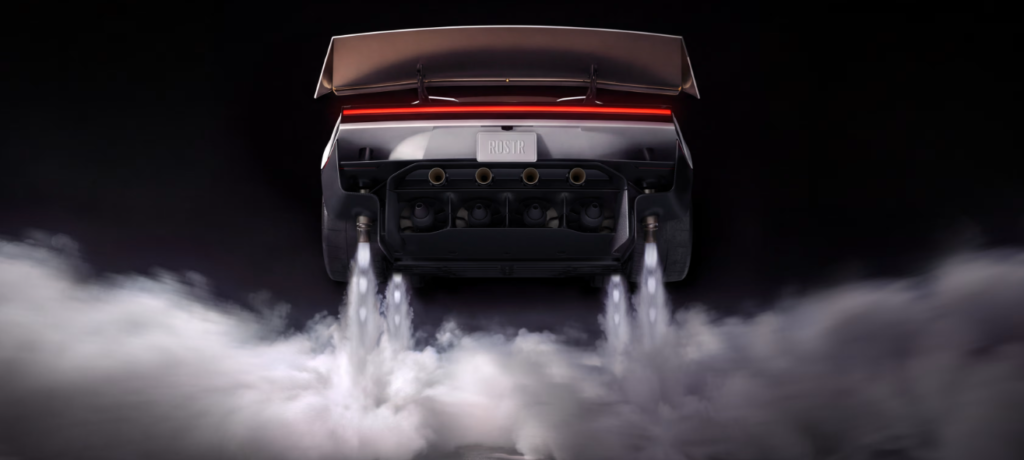
The thrusters. They don’t burn rocket fuel. They fire compressed gas stored in carbon-fibre pressure vessels, and according to TechCrunch, the system draws on a rechargeable 600-litre tank. Tesla says it fills every usable void in the car with these vessels, and claims the thrusters produce four to five times the force the tyres can.
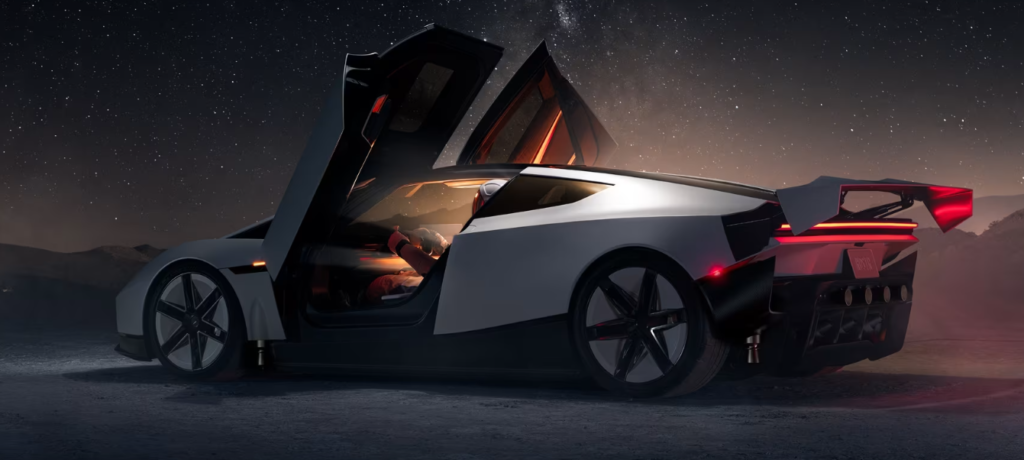
The suction system. Fans pull air from under the car to glue it to the road, or to a wall. That’s how it stays attached to an inverted ramp, even when it isn’t moving. In Track Mode, the car lowers and deploys active wings driven by Optimus robot actuators.
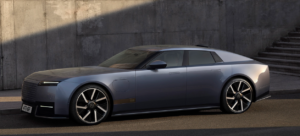
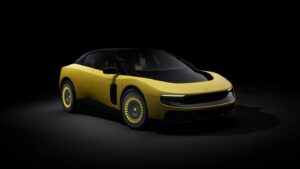
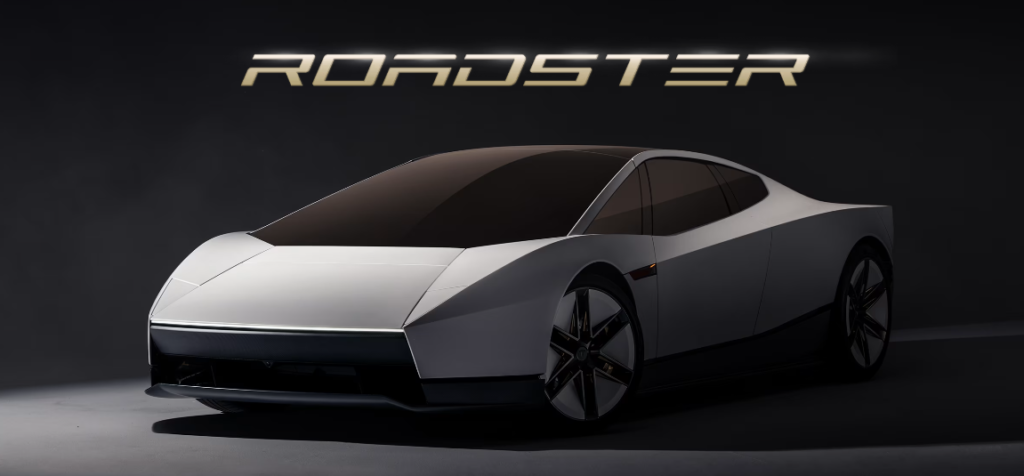
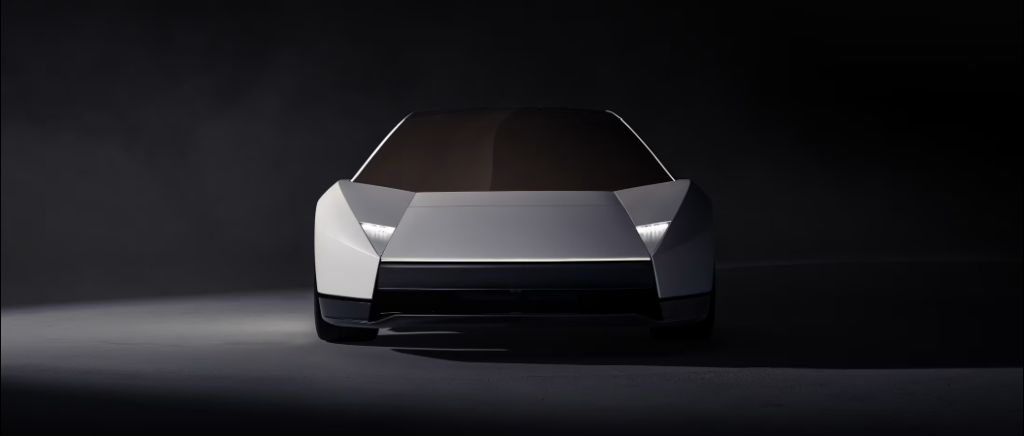
The design. It looks nothing like the 2017 prototype. The new car is sharp, angular and very “Cyber”, and Tesla says it took inspiration from the SR-71 Blackbird and F-35 fighter jets.
Reservations and pricing
Reservations reopened right after the event. For the Performance model, you pay $5,000 now and another $45,000 within 10 days, or your reservation is cancelled. The Thrust version needs a $250,000 reservation. The Rocket is invite only, with no price listed. Yahoo Finance expects the final price to land above $250,000.
2017 promise vs 2026 reality
Here’s where it gets awkward. The car Tesla revealed is quicker than promised, but it gives up a lot elsewhere.
| 2017 promise | 2026 reveal | |
|---|---|---|
| Range | 620 miles | Over 300 miles |
| Seats | 4 (2+2) | 2 at most |
| 0-60 mph | 1.9 s | Under 1.6 s (Performance) |
| Top speed | Over 250 mph | Over 230 mph (Rocket) |
| Base price | $200,000 | Not announced |
| Production | 2020 | 2028 |
So range is cut in half, and the back seats are gone. That matters, because people paid deposits back in 2017 based on the original specs.
Why Reveal It Now, When No Roadster Has Been Delivered?
First, a quick clarification, because a lot of people are confused. This isn’t a third-generation Roadster. It’s the second-generation Roadster, the same car Tesla first showed in November 2017, just completely redesigned. Not a single one has been delivered yet.
And the delays are legendary. Electrek counts at least six production slips and seven different unveil dates:
| Date | What Tesla said |
|---|---|
| Nov 2017 | Prototype revealed, production promised for 2020 |
| Jul 2020 | Pushed to 2021 |
| Jan 2021 | Pushed to 2022 |
| Sep 2021 | Pushed to 2023 |
| May 2023 | “Hopefully” 2024, “not a commitment” |
| Feb 2024 | Design goals “radically increased”, demo by end of 2024, production in 2025 |
| Nov 2025 | Production moved to 2027 or 2028 |
| Oct 1, 2026 | Reveal event cancelled due to weather |
| Oct 15, 2026 | Finally revealed, production in 2028 |
So why show it now? I think there are four reasons.
1. Nine years of pressure. Since 2017, buyers have been paying $50,000 deposits, and Founders Series buyers paid $250,000 upfront. Every missed date made the Roadster a bigger joke. At some point, Tesla had to show something.
2. Tesla has lost its halo cars. The last Model S and Model X rolled off the line in May 2026, and Fremont is being converted to build Optimus robots. Musk called the Roadster “the best of the last of the human-driven cars”. With robotaxis taking centre stage, this is now Tesla’s only car built purely for people who love driving.
3. It’s a SpaceX showcase. The event was held at a SpaceX facility, and the thrusters were built with SpaceX engineers. This is as much a show of what Musk’s companies can do together as it is a car launch.
4. Attention, plus a bit of cash. Musk himself admitted he’s “not sure it moves the needle massively from a revenue standpoint”. Tesla delivered 486,532 cars in Q3 2026, down 2.1% from its record Q3 2025, so it doesn’t need the Roadster for volume. What it gets is headlines, plus $50,000 reservations paid within 10 days.
Still, a reveal isn’t a delivery. Production is now pencilled in for 2028, and if you’ve followed this car’s history, you’ll take that date with a big pinch of salt.
Are We Finally Getting Flying Cars?
Short answer: not really. Not from Tesla, anyway.
Tesla’s team was keen to sell the dream. According to Fox Business, Musk said, “Turns out the future does have flying cars,” and Tesla engineering VP Lars Moravy added, “Flying cars are real.” But look closely at what the Roadster actually did. It hopped, flipped and landed. That’s a jump with steering, not a flight.
Here’s why it isn’t a flying car in any practical sense:
- The “flight” is short bursts. The thrusters fire compressed gas from a tank, and Yahoo Finance describes the Rocket as capable of “short flights”. You can’t cruise across town on stored air.
- The flying version isn’t road legal. The Rocket is invite only and not approved for public roads. Tesla also confirmed the Thrust pack isn’t approved for road use, according to Stuff.
- No aviation approval. There’s been no word on how regulators would treat a road car that leaves the ground, and no aviation certification has been mentioned.
- Safety isn’t the priority. Musk said Tesla would “aspire not to kill anyone” in the car, and told people that if safety is their top priority, “do not buy the Roadster”.
Meanwhile, actual flying car companies are much further along, and one of them wasted no time trolling Tesla. On the day of the reveal, Alef Aeronautics released a video of its own flying car hovering over the new Roadster.
| Vehicle | What it is | Status |
|---|---|---|
| Alef Model A | Electric drive-and-fly car, one or two seats, about $300,000 | Got a limited FAA Special Airworthiness Certificate in 2023; over 1,000 flights; customer deliveries planned for later in 2026 |
| XPeng Land Aircraft Carrier | A six-wheel van that carries a detachable eVTOL aircraft | 7,000+ orders; early deliveries expected late 2026, mass production in 2027; still seeking Chinese aviation approval |
| Tesla Roadster Rocket | Single-seat EV that hops using cold-gas thrusters | Invite only, not road legal, production from 2028 |
So yes, flying cars are slowly becoming real. But the Roadster is a ridiculously quick stunt car, not the flying car we were promised in the movies.
My Take on the New Tesla Roadster
I’ll be honest. As a piece of theatre, this was brilliant. A car climbing a wall, flipping upside down and landing on thrusters is exactly the kind of thing that goes viral, and that’s the point. Tesla needed people talking about its cars again, not just its robots.
As a product, though, I have questions. The version most people can actually buy, the Performance, has half the range and half the seats promised in 2017. The wild stuff lives in the Thrust and Rocket trims, which aren’t road legal, and in a Rocket that’s invite only. There’s still no price, and production is two years away from a company that has missed this car’s dates again and again.
And spare a thought for the people who put down deposits back in 2017. They signed up for a 620-mile four-seater. Electrek’s question is a fair one: what are they supposed to do now?
If Tesla delivers even the Performance model in 2028 with a sub-1.6-second 0-60, it’ll be one of the quickest road cars ever made. That alone is impressive. But until I see one in a customer’s driveway, I’m filing the flying part under “cool demo”.
What do you think? Is the new Roadster genius or just another Musk stunt? Let me know in the comments.