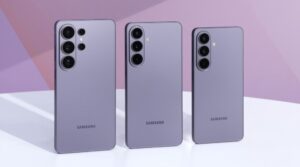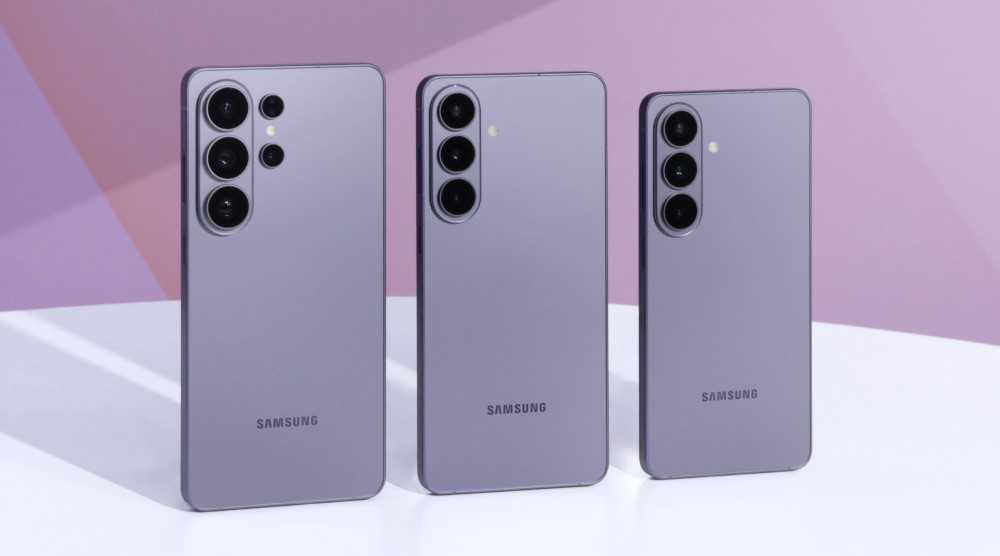
Samsung unveiled the Galaxy S26 series on February 26, 2026, at its Unpacked event in Seoul. The lineup consists of the Galaxy S26, S26+, and S26 Ultra. Each model brings refinements over the Galaxy S25, which many reviewers found too similar to its predecessor. Samsung focused on meaningful improvements this time: a customized Snapdragon 8 Elite Gen 5 chipset, stronger Galaxy AI features, faster charging across the board, and one standout hardware innovation exclusive to the Ultra model.
Pricing remains unchanged from last year. The Galaxy S26 starts at $799, the S26+ at $999, and the S26 Ultra at $1,199, all for the 256GB base model. Pre-orders began immediately after the event, with devices shipping on March 5. Trade-in offers reach up to $800 depending on the old device.
The base Galaxy S26 keeps its compact form with a 6.3-inch Dynamic AMOLED 2X display that reaches 2,600 nits peak brightness and supports a 1-120Hz adaptive refresh rate. Battery capacity increases slightly to 4,300 mAh, up from 4,000 mAh in the S25, and wired charging now reaches 69 percent in 30 minutes. The camera system includes a 50-megapixel main sensor, 12-megapixel ultrawide, and 10-megapixel 3x telephoto lens. It runs One UI 8 based on Android 16 and receives seven years of major software updates.
The S26+ steps up to a 6.7-inch QHD+ screen and a 5,000 mAh battery. It shares the same core specifications as the base model but adds a larger vapor chamber for better sustained performance during gaming or heavy multitasking.
The S26 Ultra remains the flagship. It features a 6.9-inch QHD+ display, a titanium frame, an included S Pen, and a quad-camera setup with a 200-megapixel main sensor, 12-megapixel ultrawide, 10-megapixel 3x telephoto, and 50-megapixel 5x periscope lens. The battery stays at 5,000 mAh, but wired charging now hits 60 watts, reaching 75 percent in 30 minutes.
Privacy Display
The most talked-about new feature on the Ultra is the Privacy Display. This is the first built-in privacy screen on a smartphone. When activated through Quick Settings, it uses light polarization to make the screen appear black or heavily dimmed when viewed from the side. The person holding the phone sees the full image clearly, but anyone looking over the shoulder sees little to nothing. The mode can be set to cover the entire display, hide specific apps, blur notifications, or mask passwords and sensitive information.
Samsung developed this capability using a new OLED panel called Flex Magic Pixel. The panel contains two types of pixels that control light dispersion differently. Wide pixels emit light in all directions, providing the typical viewing angles found on standard OLED screens. Narrow pixels direct light primarily forward in a tighter beam, with very limited dispersion to the sides. When Privacy Display is activated, the wide pixels are dimmed significantly, while the narrow pixels remain fully active. This restricts visibility to a narrow forward cone, making the screen unreadable from oblique angles.
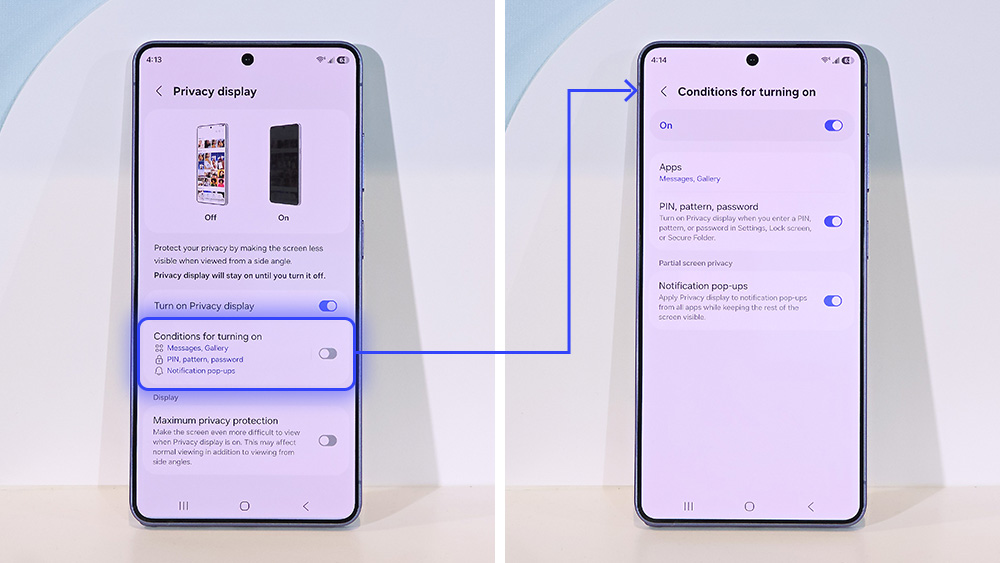
The feature offers two main modes. Maximum Privacy Protection restricts the entire screen. Partial Screen Privacy selectively applies the effect to specific areas, such as the notification shade, message previews, password fields, or banking apps. The rest of the screen remains fully visible from all angles. The phone can also trigger the mode automatically based on context. On-device AI detects situations like entering a PIN, opening a banking app, or viewing certain notifications, and it applies partial privacy only to those elements.
The biggest advantage is convenience. Traditional privacy films darken the entire screen permanently and often reduce brightness or color accuracy even when viewed head-on. Samsung’s solution avoids those compromises. When the feature is off, the display behaves like any high-end OLED panel with excellent viewing angles and peak brightness of 2,600 nits. When on, it delivers targeted protection without noticeable impact on the primary user’s experience. Battery impact is minimal because the system only dims specific pixel types rather than running an additional backlight or filter layer.
This feature is exclusive to the S26 Ultra because it requires the custom Flex Magic Pixel OLED panel. The S26 and S26+ models do not have it. The main limitation is that it is angle-based. It does not prevent someone from seeing the screen if they stand directly behind you and look over your shoulder at very close range. However, for most real-world shoulder-surfing scenarios, such as crowded trains, cafes, or airport queues, it is highly effective.
Cameras
The camera system on the S26 Ultra also receives meaningful upgrades. The rear array uses the same sensor resolutions as the S25 Ultra, but Samsung widened the apertures on key lenses. The 200-megapixel wide camera now opens to f/1.4, allowing 47 percent more light intake. The 5x periscope telephoto opens to f/2.9, a 37 percent improvement in light gathering. These changes deliver brighter, cleaner images and videos in low-light conditions and when zoomed in.
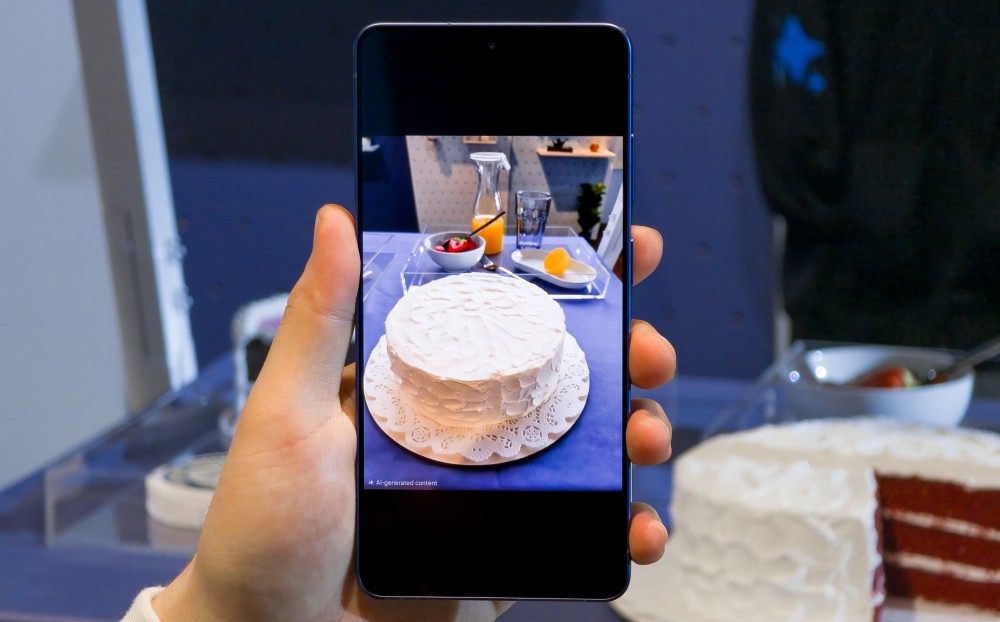
Nightography Video is noticeably better. The wider apertures combined with advanced noise reduction algorithms produce clearer, more vibrant footage in dim environments. The processor analyzes noise patterns specific to each sensor and applies targeted reduction per frame. Night shots, both photos and video, show reduced grain, richer colors, and sharper details.
The Ultra supports the Advanced Professional Video codec for the first time on a Galaxy device. This codec is designed for efficient compression while preserving high quality, making it suitable for professional editing workflows. It supports built-in look-up tables and Log recording for greater color grading flexibility.
Video stabilization receives a major boost with Horizontal Lock. The phone uses gyro and acceleration sensors to detect gravity and keep the horizon perfectly level, even if you tilt or rotate the device 360 degrees during recording. This eliminates crooked footage during walking shots, action scenes, or vlogging.
The AI image signal processor now applies to the front camera as well. This results in more natural skin tones, finer detail in mixed lighting, and better portrait selfies with accurate bokeh.
Samsung kept the same sensor resolutions and zoom levels as the S25 Ultra but focused on real-world usability. The wider apertures provide the biggest tangible improvement. Nightography Video and Horizontal Lock are practical upgrades for everyday users and creators. The Advanced Professional Video support adds pro appeal, while AI refinements make editing faster and more intuitive.
Compared with the S25 Ultra, the S26 Ultra’s camera feels noticeably better in low light, video stabilization, and creative control. It may not be a revolutionary hardware leap, but the combination of physical tweaks and software polish makes it one of the strongest smartphone cameras available in early 2026. For photography enthusiasts, especially those shooting in challenging lighting or recording video, these changes are meaningful enough to consider an upgrade.
Battery
Samsung’s battery choices remain conservative. The S26 series continues to use traditional lithium-ion cells. The Ultra keeps the same 5,000 mAh capacity as the S24 Ultra and S25 Ultra. Competitors such as Xiaomi and OnePlus have moved to silicon-carbon anodes that allow 7,000 mAh or more in similar body sizes. Samsung explains that it prioritizes long-term stability, consistent performance across temperature ranges, and minimal degradation over time. The company has confirmed it is working on solid-state batteries, but those are not expected until 2027 or later. For now, the S26 lineup relies on incremental efficiency gains from the new chipset and software optimizations rather than a major capacity increase.
Worth the Upgrade?
Compared with the Galaxy S25, the S26 series feels like a clear step forward. The S25 received criticism for minor design tweaks, unchanged battery sizes, and AI features that were not fully mature. The S26 addresses many of those points. The processor delivers better efficiency and stronger on-device AI performance. Charging speeds are noticeably faster, especially on the Ultra. The Privacy Display on the Ultra adds a practical tool that no other phone currently offers. Galaxy AI has also matured with more reliable real-time translation, improved photo editing tools, and proactive suggestions that actually feel useful.
Is the S26 worth upgrading from the S25? For most people, the answer is yes. The performance jump, faster charging, and new privacy feature make daily use feel more polished and secure. The S25 was solid but not exciting. The S26 brings enough fresh ideas and refinement to justify the upgrade, especially for users who value AI tools and data privacy. If you already own an S25 and do not need the privacy screen or faster charging, you can probably wait another year. For anyone coming from an older model or switching brands, the S26 lineup represents Samsung at its strongest in recent memory.