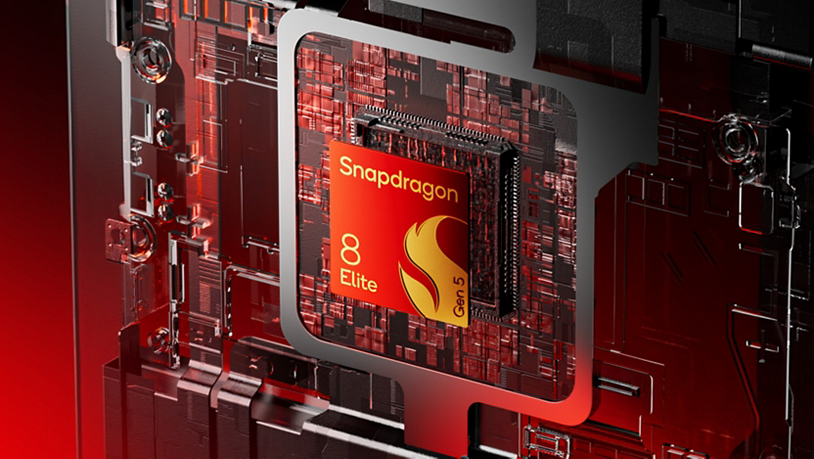
As 2025’s smartphone wars intensify with flagships like the OnePlus 15 and Xiaomi 17 series hitting shelves, Qualcomm’s Snapdragon 8 Elite Gen 5 has emerged as the engine of innovation. Unveiled at the Snapdragon Summit on September 24, this 3nm powerhouse delivers console-level gaming, agentic AI, and all-day efficiency on mobile. Fabricated on TSMC’s advanced N3P process, the Gen 5 powers devices from OnePlus, Xiaomi, Vivo, Oppo, and Samsung, redefining smartphone capabilities. Why the “Gen 5” name? It marks Qualcomm’s fifth iteration of custom-designed silicon since transitioning from Kryo to Oryon cores in 2021, emphasizing architectural leaps over the Kryo-based Snapdragon 8 series and signaling a new era of elite performance. But does its 23% GPU boost (despite hyped 40% claims) live up to the frenzy? Let’s analyze its strengths, real-world impacts in key phones, and why it’s a game-changer for gamers and power users.
Core Specs: Oryon CPU, Adreno 840 GPU, and Hexagon NPU Breakdown
The Snapdragon 8 Elite Gen 5 features Qualcomm’s third-generation custom Oryon CPU: two prime cores at 4.6GHz for single-threaded tasks, and six performance cores at 3.62GHz for multi-core power. This delivers 20% better overall CPU performance and 35% improved efficiency over the Snapdragon 8 Elite (2024), enabling faster app launches and smoother multitasking without thermal issues.
The Adreno 840 GPU is the highlight, with Qualcomm claiming a 23% performance uplift, 20% power savings, and 25% faster ray tracing for lifelike lighting in mobile games. The “40% GPU leap” in some reports is likely overstated, stemming from early dev kit aggregates blending rasterization and ray-tracing gains. Key to its prowess is 18MB of Adreno High Performance Memory (HPM) cache, boosting bandwidth by 38% and cutting latency for sustained gaming. It supports Unreal Engine 5 (Nanite, Lumen, Chaos Physics), mesh shading for efficient geometry, and Tile Memory Heap for optimized VRAM, rivaling last-gen consoles.
AI performance soars with the Hexagon NPU, 37% faster and 16% more efficient than its predecessor. Paired with an upgraded Sensing Hub, it enables “agentic AI”—proactive assistants that learn on-device for tasks like photo editing or workout suggestions based on biometrics. The triple 20-bit Spectra AI ISP handles 4x dynamic range for pro video (world-first Advanced Professional Video codec for near-lossless 8K/30fps), while the X85 modem achieves 12.5Gbps downloads with 40% Wi-Fi 7 power savings.
Platform-wide efficiency improves by 16%, adding 1.5-2 hours of gaming or mixed use, making it faster, smarter, and more power-efficient.
The 23% GPU Leap (and Why It Feels Like 40%) in Action: OnePlus 15 and Xiaomi 17 Benchmarks
Early tests on reference devices and flagships show impressive results. In 3DMark Wild Life Extreme, the Gen 5 scores ~21% higher than the Galaxy S25 Ultra’s overclocked 8 Elite, with Solar Bay (ray tracing) up 18-25%. AnTuTu v10 prototypes hit nearly 3 million points, a 20% jump from 8 Elite averages. Geekbench 6 scores show single-core at 3,709-3,831 and multi-core at 11,000-12,459, edging Apple’s A19 Pro in raw speed while using less power.
The OnePlus 15, launched in China on September 30, leverages this for “unrivaled gaming.” Its 165Hz BOE X3 display pairs with the Adreno 840 for Delta Force at a locked 165fps (148.8fps 1% lows) on just 4.7W, sustained without throttling, outpacing the iPhone 17 Pro Max in Honkai: Star Rail and Genshin Impact by 15-20% in frame stability. HPM adds 10% efficiency in miHoYo titles, while Unreal Engine 5 optimizations deliver console visuals in ports like Resident Evil 4 Remake.
The Xiaomi 17 series (launched September 24) was first to market, but benchmarks reveal conservative tuning: Geekbench single-core ~3,300-3,400 (vs. reference 3,800), multi ~10,000-10,400. GPU holds strong in Wild Life (21% over 8 Elite), but Xiaomi’s vapor chamber and HyperOS 2.0 prioritize thermals over peaks, yielding 16% better ray tracing vs. Dimensity 9500, ideal for Leica-tuned 8K video in its rear “plateau” screen setup. In Genshin, it sustains 60fps on ultra for hours, with AI upscaling via the NPU for sharper textures.
| Benchmark/Test | Snapdragon 8 Elite Gen 5 (Ref/OnePlus 15) | Snapdragon 8 Elite (OnePlus 13 Avg) | Apple A19 Pro (iPhone 17 Pro) | MediaTek Dimensity 9500 Avg |
|---|---|---|---|---|
| Geekbench 6 Single-Core | 3,709-3,831 | 2,967 | ~3,700 | ~3,500 |
| Geekbench 6 Multi-Core | 11,000-12,459 | 8,807 | ~10,500 | ~10,000 |
| AnTuTu v10 Total | ~2,900,000 | ~2,400,000 | N/A (Cross-platform) | ~2,700,000 |
| 3DMark Wild Life Extreme (GPU) | +23% over 8 Elite (~9,500) | ~7,800 | ~8,500 | ~8,200 |
| 3DMark Solar Bay (RT) | +25% over 8 Elite (~5,200) | ~4,200 | ~4,100 | ~4,500 |
| Gaming (Genshin 60fps Sustain) | 4-5W, 2+ hrs no throttle | 5-6W, 1.5 hrs | 4.5W, 2 hrs | 5W, 1.8 hrs |
Data averaged from early prototypes and flagships; real-world varies by OEM tuning.
AI Edge: From Reactive to Agentic Intelligence
The Gen 5’s NPU transforms AI from reactive to agentic. On-device models anticipate user needs: auto-enhancing photos, translating calls in real time, or coaching fitness via the Sensing Hub’s multimodal inputs (heart rate, motion, voice). In the OnePlus 15, DetailMax Engine uses this for AI-driven unblurring and reflection removal in 8K clips. Xiaomi 17’s HyperOS leverages it for personalized widgets on the rear screen, like auto-summarizing notifications. MLPerf benchmarks show 37% faster inference, enabling complex tasks like generative art or AR overlays without cloud reliance, prioritizing privacy and speed.
Game-Changer for Gaming: Sustained Power Meets Immersive Efficiency
Mobile gaming’s boom drives the Gen 5’s appeal. Its 23% GPU boost (25% in ray tracing) delivers 120-165fps in AAA ports, sustained via HPM’s 10% power savings, avoiding fan noise or overheating. In OnePlus 15 tests, Delta Force hits 165fps on 4.7W, rivaling PS5 lite while adding 1:48 extra playtime. Xiaomi 17 Pro Max’s 7,500mAh battery plus Gen 5 efficiency supports 3+ hours of Genshin ultra.
Efficiency extends beyond games: 16% SoC-wide savings enable slimmer designs (like OnePlus’s 8.5mm frame) or larger batteries without compromise. For developers, Unreal Engine 5 tools lower barriers to console-quality mobile titles, fueling esports growth.
Why It’s a 2025 Essential: Verdict and Future-Proofing
The Snapdragon 8 Elite Gen 5 doesn’t just iterate; it enables 2025 flagships to outpace iPhones in raw power while narrowing the efficiency gap. In the OnePlus 15, it’s a gaming juggernaut; in Xiaomi 17, an AI/video wizard. Drawbacks include variable OEM tuning (Xiaomi’s conservative scores) and slow ray tracing adoption. At ~$700-1,000 in devices, it’s accessible firepower.
Gamers craving sustained 120fps or AI enthusiasts wanting on-device magic will find this chip indispensable. With Samsung’s S26 series looming, the frenzy is just beginning. Grab a Gen 5 phone now, or wait for optimizations? Share your take below!