Apple’s “Awe Dropping” event on September 9, 2025, introduced a fresh twist to its smartphone lineup with the iPhone 17 Air – a device that redefines thinness without compromising on performance. Positioned as the successor to the larger “Plus” models, the iPhone 17 Air stands out for its razor-thin profile, making it Apple’s slimmest iPhone to date. While the “Air” moniker evokes thoughts of lightweight, accessible devices like the MacBook Air, this iPhone variant takes a premium route, sparking debates on its value proposition. In this in-depth article, we’ll explore every facet of the iPhone 17 Air, from its design and specifications to how it stacks up against competitors like the Samsung Galaxy S25 Edge, and ultimately, whether it’s worth your investment.
Sleek Design: Thinner Than Ever Before
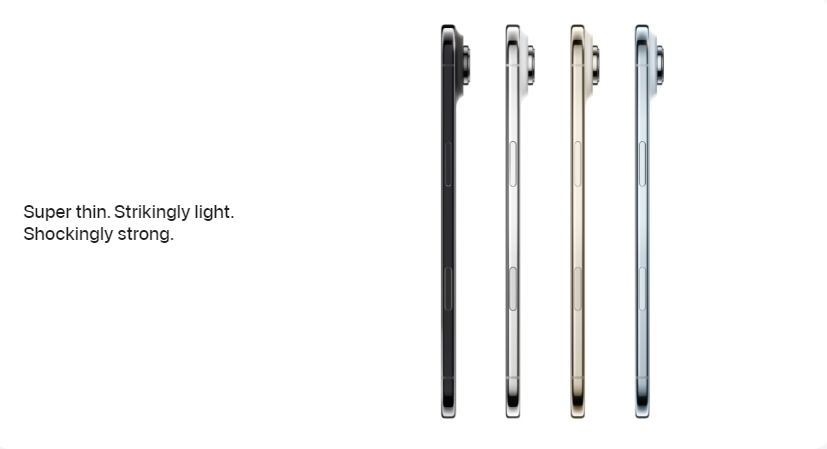
At just 5.6mm thick, the iPhone 17 Air is Apple’s thinnest smartphone yet, shaving off significant bulk compared to previous models. This featherlight titanium body not only enhances portability but also maintains durability, with a design that’s both elegant and robust. The 6.6-inch Super Retina XDR display features thinner borders for an immersive viewing experience, and the overall aesthetic includes a horizontal pill-shaped camera module on the rear – a departure from the traditional square array seen on other iPhones.
Available in new colors like orange, dark blue, and purple (shared across the iPhone 17 lineup), the Air model emphasizes minimalism. It’s crafted for users who prioritize a large screen in a compact form factor, weighing in lighter than its predecessors while incorporating Apple’s custom Wi-Fi/Bluetooth chip for improved connectivity and thermal management to prevent overheating. This design philosophy draws inspiration from Apple’s push toward slimmer hardware, echoing trends in the industry but with Cupertino’s signature polish.
Power-Packed Specifications and Features
Under the hood, the iPhone 17 Air is no slouch. It’s powered by the A19 Pro chip, which delivers enhanced performance for multitasking, gaming, and AI-driven tasks. The 6.6-inch display supports a 120Hz ProMotion refresh rate – a feature previously reserved for Pro models – ensuring buttery-smooth scrolling and responsiveness. Storage starts at 256GB, with options up to 512GB, aligning with the lineup’s doubled base storage compared to the iPhone 16 series.
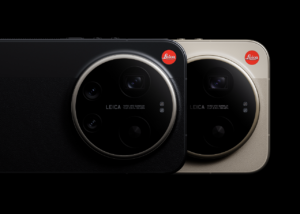
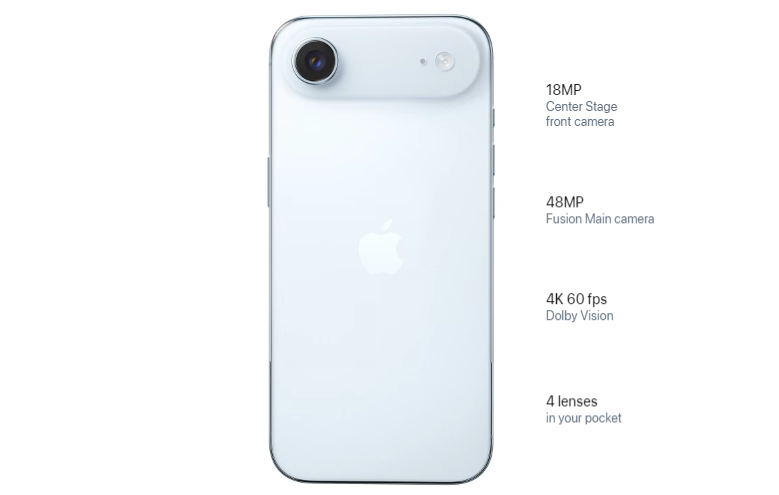
Camera-wise, the iPhone 17 Air opts for a simplified setup: a single 48MP rear sensor in that distinctive horizontal pill module, capable of high-quality photos and videos, including advanced features like Center Stage for video calls. The front-facing camera upgrades to 24MP, doubling the resolution from prior non-Pro models for sharper selfies and improved low-light performance. While it lacks the multi-lens versatility of the Pro variants, Apple Intelligence integration enhances photography with AI tools like real-time editing and object removal.
Battery life is a highlight, with Apple claiming “impressive” endurance despite the slim profile, thanks to optimized internals and the A19 Pro’s efficiency. It runs on iOS 26, featuring the new “Liquid Glass” UI for a glossy, adaptive interface, along with broader ecosystem perks like simultaneous front/rear recording (though limited here) and deeper health tracking integration with Apple Watch.
Other specs include vapor chamber cooling for sustained performance, support for Apple’s ecosystem-wide features like satellite connectivity in emergencies (via compatible accessories), and enhanced durability with Ceramic Shield 3 for three times the scratch resistance.
Pricing Paradox: ‘Air’ as Premium, Not Entry-Level
Starting at $999 in the US (with international pricing like AU$1,799 and around ₹82,900 in India for similar tiers), the iPhone 17 Air is notably pricier than the base iPhone 17, which launches at $799. This positions it closer to the Pro models ($1,099 starting) rather than as an affordable option. Preorders begin on September 12, 2025, with devices shipping and available in stores from September 19.
Here’s where the “Air” naming gets intriguing – and somewhat ironic. In Apple’s MacBook lineup, the MacBook Air has long been the entry-level, budget-friendly choice, offering lightweight design at a lower price point than the Pro models. Launched in 2008, the MacBook Air starts around $999 today, undercutting the MacBook Pro’s $1,599 base. Yet, with the iPhone 17 Air, Apple flips the script: it’s a premium upgrade over the base model, targeting users who want a larger, slimmer device without stepping into Pro territory. This shift reflects Apple’s strategy to differentiate through form factor innovation, but it could confuse consumers expecting “Air” to mean “affordable.” Critics argue it dilutes the branding, especially amid Apple’s antitrust scrutiny and push for higher-margin products. Trade-in deals can net up to $700 off, softening the blow for upgraders from iPhone 13 or later.
Head-to-Head: iPhone 17 Air vs. Samsung Galaxy S25 Edge
The iPhone 17 Air enters a market where slim designs are trending, directly competing with devices like the Samsung Galaxy S25 Edge, launched earlier in May 2025. Samsung’s offering is slightly thicker at 5.8mm and weighs 163g, with a titanium frame for durability – similar to Apple’s approach. It boasts a 6.7-inch LTPO AMOLED display with QHD+ resolution and 120Hz adaptive refresh rate, edging out the iPhone’s 6.6-inch in size but matching fluidity.
Specs-wise, the S25 Edge packs a Snapdragon 8 Elite processor, 12GB RAM, and storage options from 128GB to 512GB. Its camera system is more versatile: a 200MP main sensor with 2x optical quality zoom, paired with a 12MP ultra-wide, outperforming the iPhone’s single 48MP rear in megapixels and lens variety. Battery capacity is 3,900mAh with fast charging, comparable to the iPhone’s all-day claims, though Samsung emphasizes AI optimizations like Audio Eraser and Auto Trim.
Priced at $1,099 (with colors like Titanium Silver), the S25 Edge is $100 more expensive than the iPhone 17 Air, running Android 15 with One UI 7 and Galaxy AI features for personalization and noise reduction. While the iPhone excels in iOS ecosystem integration and privacy (e.g., Apple Intelligence), the Samsung offers expandable AI tools and superior camera hardware. Availability-wise, the S25 Edge has been on shelves since May 30, 2025, giving it a head start.
| Feature | iPhone 17 Air | Samsung Galaxy S25 Edge |
|---|---|---|
| Thickness/Weight | 5.6mm / Featherlight | 5.8mm / 163g |
| Display | 6.6-inch Super Retina XDR, 120Hz | 6.7-inch AMOLED, QHD+, 120Hz |
| Processor | A19 Pro | Snapdragon 8 Elite |
| Camera (Rear) | Single 48MP | 200MP main + 12MP ultra-wide |
| Battery | Impressive all-day (optimized) | 3,900mAh |
| Starting Price (US) | $999 | $1,099 |
| OS/Unique Features | iOS 26, Apple Intelligence | Android 15, Galaxy AI (e.g., Audio Eraser) |
Is the iPhone 17 Air Worth Buying?
Ultimately, whether the iPhone 17 Air justifies its $999 price tag depends on your priorities. Pros include its unmatched thinness for one-handed use, seamless Apple ecosystem integration, future-proof specs like 120Hz display and A19 Pro chip, and strong battery life in a slim package. If you’re upgrading from an older Plus model or value portability without sacrificing screen real estate, it’s a compelling choice – especially with trade-in discounts bringing it under $300 for eligible devices.
Cons are evident: the single-camera setup may disappoint photography enthusiasts, and the premium pricing contradicts the “Air” legacy of affordability seen in MacBooks. Compared to the base iPhone 17 ($799 with similar core features but a smaller 6.3-inch screen), the Air feels like an upsell for size and slimness alone. Against the Samsung Galaxy S25 Edge, it lags in camera versatility and raw power but wins on software longevity and privacy.
If you’re deep in Apple’s world and crave a big, thin phone, yes – it’s worth it. Android users or budget-conscious buyers might look elsewhere, like the discounted iPhone 16 at $599 or Samsung’s more feature-packed alternatives. For hands-on insights, check back for our full review post-launch. What do you think – slim appeal or overpriced gimmick? Share in the comments!