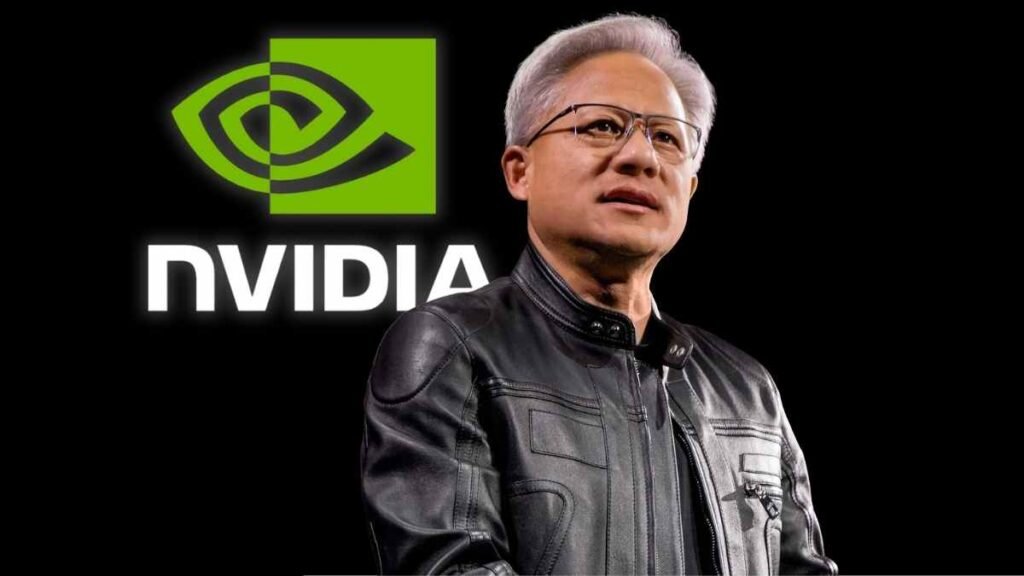
Two weeks ago, Jensen Huang was the most powerful man in tech. The leather jacket, the keynotes, the world’s most valuable company. Today, he’s gone.
On November 12, 2026, Nvidia announced that Huang had resigned as President, CEO and board member, effective immediately. CFO Colette Kress is now interim CEO, and former Synopsys CEO Harvey C. Jones has become Nvidia’s first-ever board chair. The board is searching for a permanent replacement.
It ends a 33-year run. Huang co-founded Nvidia in 1993 and was the only CEO it ever had. And it all fell apart in just 15 days, starting with a report about a relationship with a woman US intelligence officials suspect of spying for China.
Here’s how it happened, how Huang got Nvidia to the top, and what comes next.
How the Jensen Huang Scandal Unfolded
October 29: The spy report. The New York Times reported that US officials had spent more than a year looking at Alice Huang (no relation), an executive at Megaspeed, a Singapore-based Nvidia customer. According to the Times, US intelligence officials concluded she was working for the Chinese government and had grown close to Jensen Huang. China has called the allegations “groundless speculation”.
At first, Huang played it down. In a Bloomberg interview, he described his dealings with her as “related to Megaspeed” and “completely normal”.
November 5: Congress calls. Three Republican committee chairs, John Moolenaar, Brian Mast and Rick Crawford, asked Huang to attend a closed-door briefing on November 18.
November 8: The admission. Huang admitted to Nvidia’s board that he’d had a relationship with Alice Huang. In a memo to staff, he wrote: “I was unfaithful to my wife. There is no excuse for what I did. I am deeply sorry.” He didn’t directly address the spying allegations.
The board opened an independent investigation into whether company secrets or national security had been compromised. It said it had “no reason to believe” either had been, and that it “has confidence in Jensen and his leadership team.”
November 9 to 10: More pressure. Nvidia’s stock fell 4.3% on November 9, even as the wider market rallied. Huang pulled out of public appearances. The Information reported that associates of Alice Huang set up a company that allegedly helped buy about $7.5 billion worth of Nvidia chips for Chinese firms, including export-restricted products.
November 11: The second affair. The New York Times reported, citing five employees, that Huang also had a relationship with a senior Nvidia executive who reported directly to him. Neither Huang nor Nvidia has publicly confirmed this second report. Hours later, the Wall Street Journal reported that the board was preparing to oust him, and the stock dropped about 8% in after-hours trading. Lawmakers also warned that Huang could be subpoenaed if he didn’t show up for the briefing.
November 12: The resignation. Huang stepped down from every role at Nvidia. By then, the stock had fallen about 21% since October 28, according to PC Gamer. Huang hasn’t made a public statement about his exit.
How Jensen Huang Built Nvidia
Whatever you think of how this ended, it’s hard to overstate what Huang built.
He was born in Taiwan, moved to the US as a child, and worked at Denny’s as a teenager. In 1993, he co-founded Nvidia with Chris Malachowsky and Curtis Priem, famously planning the company over meals at a Denny’s in San Jose.
The early years were rough. Nvidia’s first chip flopped, and the company came close to running out of money before the RIVA 128 saved it in 1997. In 1999, Nvidia went public and launched the GeForce 256, which it marketed as the world’s first GPU. For the next decade, Nvidia was mainly a gaming company.
Then came Huang’s biggest bet. In 2006, Nvidia launched CUDA, which let developers use GPUs for general computing, not just graphics. For years, Wall Street questioned why Nvidia was spending so much on it. In 2012, a neural network called AlexNet was trained on Nvidia gaming GPUs and changed the course of AI. Suddenly, everyone needed Nvidia.
When ChatGPT kicked off the AI boom, Nvidia was the only company ready to sell the picks and shovels. It became the first chipmaker worth $1 trillion in 2023, and on October 29, 2025, it became the first company in history worth $5 trillion. Exactly one year later, the New York Times published the report that would end his career.
Huang’s leadership was the story. He famously had dozens of direct reports, avoided traditional one-on-ones, and kept a startup mentality at a trillion-dollar scale. He became a fixture in Washington and Beijing, and the face of the entire AI industry.
What Happens Next for Nvidia?
The hard part: Huang never named a successor. As former White House AI adviser Carmem Domingues told Euronews, there’s no one “prepped and ready to go next in line.” Here’s who is being talked about.
Colette Kress (interim CEO). Nvidia’s CFO since 2013, after nearly 25 years in finance at Microsoft and Cisco. She knows the business and Wall Street trusts her. Most analysts see her as a steady pair of hands for now, not the long-term pick.
Ian Buck (internal favourite). Nvidia’s head of hyperscale AI products. He joined in 2004 and was a leader in developing CUDA, the software that made Nvidia’s AI dominance possible. Reuters reports that analysts see him as the most likely permanent CEO, because the board will probably want an engineer running a technology company.
Rene Haas (outside option). The Arm CEO and a former Nvidia executive. A chip-deals banker told Reuters he makes the most “logical sense” as an outsider.
Others have been floated too, including long-time Nvidia executive Jeff Fisher, AMD CEO Lisa Su and Intel CEO Lip-Bu Tan. One fund manager even suggested a co-CEO setup, pairing Kress on finance with Buck on technology.
Whoever gets the job faces a tough first few weeks:
- Earnings on November 17. Nvidia reports its quarterly results under interim leadership, and investors will be watching every word.
- Washington. The congressional pressure won’t stop with Huang’s exit. Senators Elizabeth Warren and Chris Coons have asked the administration to preserve documents on chip exports to China, and House China committee chair John Moolenaar says Nvidia “must now change its corporate practices”.
- China. Huang was Nvidia’s key relationship builder in both Washington and Beijing. Losing him, under these circumstances, makes an already complicated China business even harder.
- The investigation. The board’s probe into whether any secrets or national security interests were compromised is still ongoing.
Can Anyone Fill Jensen Huang’s Shoes?
The short answer is no, at least not in the same way.
As Stephen Innes of SPI Asset Management put it, investors bought Nvidia’s technology and Huang’s vision in roughly equal measure. Now the market has to work out how much of that premium was Jensen himself. Bloomberg Intelligence’s Mandeep Singh expects Nvidia to be less aggressive under new leadership.
But Nvidia isn’t a one-man company. Its real moat is CUDA, its software ecosystem and years of customer lock-in, and none of that disappeared on November 12. Apple survived losing Steve Jobs, and Microsoft got even bigger after Bill Gates stepped back. The difference is that Jobs and Gates left on their own terms, and Huang is leaving in the middle of a scandal with national security questions hanging over it.
My Take
This is one of the most dramatic falls in tech history. In two weeks, Huang went from untouchable to out of the company he created.
The affair itself might have been survivable. The board backed him after he admitted it. What it couldn’t survive was the combination: a suspected Chinese intelligence link at the world’s most strategically important chip company, Congress threatening subpoenas, a second alleged relationship with a direct report, and a falling stock price. For a company that sits at the centre of the US-China tech race, that was too much risk.
Let’s also be clear on what’s still unproven. Huang admitted the first affair. The spying claim comes from US intelligence officials cited by the New York Times, China denies it, and the board says it has seen no evidence that secrets were leaked. The second relationship is a report, not a confirmed fact. The investigation could still change the picture.
As for Nvidia, I don’t think this breaks the company. The products, the roadmap and the demand for AI chips are still there. But the next CEO won’t be Jensen Huang, and Nvidia is about to find out just how much of its magic came from one man in a leather jacket.
What do you think? Can Nvidia stay on top without Huang? Let me know in the comments.