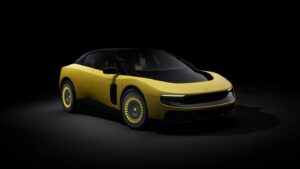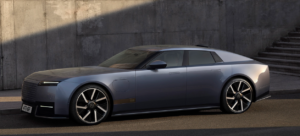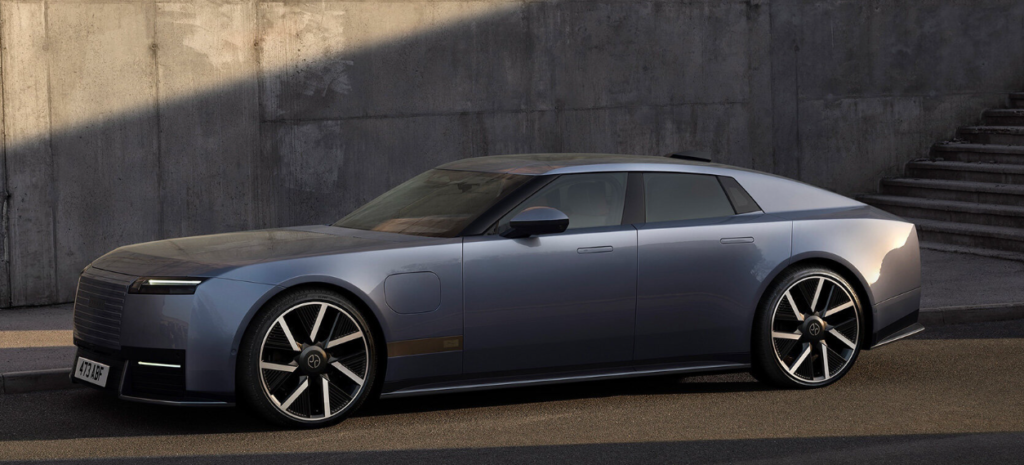
After all the fuss in the press and the polarizing opinions they received for revealing their Type 00 concept back in 2024, Jaguar have finally released a production-ready Type 01.
The Type 01 is an all-electric four-door grand tourer with unorthodox styling which has so far generated mixed reviews from experts. In my opinion, they have followed the footsteps of Tesla’s Cybertruck approach by designing a car that stands out and gets talked about a lot.
Jaguar pulled the covers off the Type 01 in New York on October 6, 2026. The headline numbers: three electric motors, 1,030 PS, up to 450 miles of WLTP range and a starting price of £130,000 in the UK or $130,500 in the US. Orders open in early 2027, and first deliveries are expected in the second half of 2027.
Oh, and it’s pronounced “Zero One”. The “Type” nods to the C-Type, D-Type and E-Type, the “0” stands for zero emissions and the “1” marks the first car of the new Jaguar.
Jaguar Type 01 Specs at a Glance
| Spec | Jaguar Type 01 |
| Body | Four-door, four-seat electric grand tourer |
| Motors | Three (one front, two rear) |
| Power | 1,030 PS (1,015 hp) |
| Torque | 1,365 Nm (1,007 lb-ft) |
| 0-100 km/h (0-62 mph) | 3.2 seconds |
| Battery | 118 kWh usable, 850-volt architecture |
| Range | Up to 720 km / 450 miles (WLTP, est.); about 400 miles (EPA, anticipated) |
| DC fast charging | Up to 350 kW; 321 km (200 miles) added in about 13 minutes |
| Drag coefficient | 0.23 Cd |
| Wheels | 23-inch |
| Price | From £130,000 (UK) / $130,500 (US) |
| Orders / deliveries | Early 2027 / second half of 2027 |
Performance: The Most Powerful Jaguar Road Car Ever
Let’s start with the number everyone is talking about. The Type 01 makes 1,030 PS (1,015 hp) and 1,365 Nm of torque, which makes it the most powerful road car Jaguar has ever built. That power comes from a tri-motor setup, with one motor up front and two at the rear.
Jaguar claims 0-100 km/h in 3.2 seconds and 100-180 km/h in 4.0 seconds. That second figure is the one I care about more. Plenty of EVs are quick off the line, but pulling that hard at motorway speeds is real GT territory.
It’s not just a straight-line car either. Intelligent Torque Vectoring can send up to 87% of the torque to the rear in Dynamic mode, and the rear motors can disconnect when you’re cruising to save energy. Weight distribution is 50:50, the rear wheels steer by up to 6 degrees, and air suspension comes as standard. There are five drive modes: Jaguar, Dynamic, Efficient, Ice & Snow and a custom Curated mode.
According to Top Gear, the Type 01 is also the stiffest Jaguar yet, at 57,000 Nm per degree of torsional rigidity. For context, McLaren’s W1 carbon tub is rated at 51,000 Nm per degree. That’s a big claim for a luxury four-seater.
Early prototype drives back this up. What Car? found it less agile than a Porsche Taycan but more composed than the softer BMW i7, with a calm ride and low wind and road noise.
Jaguar Type 01 Range and Charging
The battery is a 118 kWh (usable) pack on an 850-volt system. Jaguar estimates up to 720 km (450 miles) on the WLTP cycle and anticipates around 400 miles on the stricter US EPA cycle. At sustained highway speeds, Jaguar quotes up to 320 miles, which is the more honest real-world number.
Charging peaks at 350 kW. Jaguar says you can add 321 km (200 miles) in as little as 13 minutes, and 10-80% takes about 22 minutes. Part of the range comes from aero: a 0.23 drag coefficient makes it the slipperiest Jaguar ever, and it took more than 7,000 aero tests to get there.
One thing Jaguar hasn’t shared yet is the weight. With a 118 kWh battery and three motors, don’t expect it to be light.
Jaguar Type 01 Price and Release Date
The Type 01 starts at £130,000 in the UK and $130,500 in the US (destination charges likely extra). Earlier estimates had it closer to £120,000, so the final figure came in a little higher than expected.
And that’s just the entry ticket. Reports from Top Gear and Autocar suggest most buyers will spend around £150,000 or more once they start ticking personalisation boxes. Jaguar is also offering limited “Chromatic Moments” cars, with just 60 units in two special colours.
Order books open in early 2027, with first customer deliveries expected in the second half of 2027. In the US, it will be sold as a 2028 model year car. Jaguar says the Type 01 is designed, engineered and built in the UK, and What Car? reports it will be built at JLR’s Solihull plant, with battery assembly in Wolverhampton.
The price tells you everything about the new strategy. Jaguar’s North American brand director, Brandon Baldassari, said its average transaction price in the US is around $70,000 today and will rise to about $130,000. Jaguar has also cut its US dealer network from about 200 retailers to about 80. Fewer cars, fewer dealers, much higher prices.
Design and Interior: Love It or Hate It
This is where the Type 01 splits opinion. Jaguar tested it with 2,500 people across six continents. It got more top scores than any Jaguar before it, and also more low scores. That pretty much sums up the car.
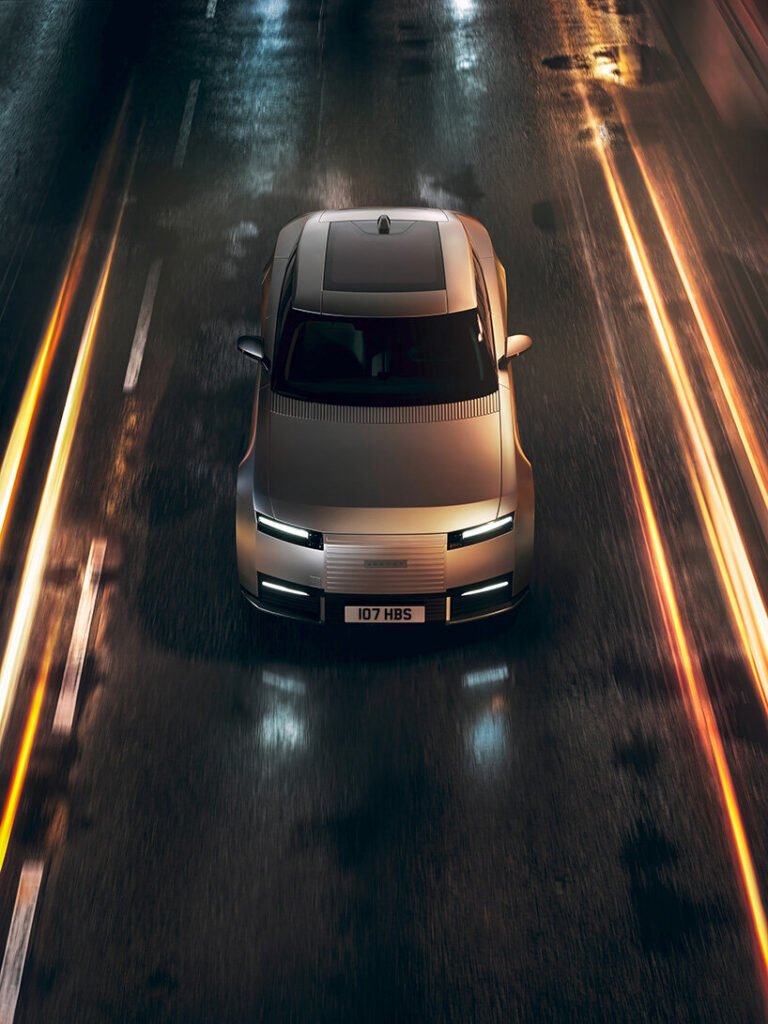
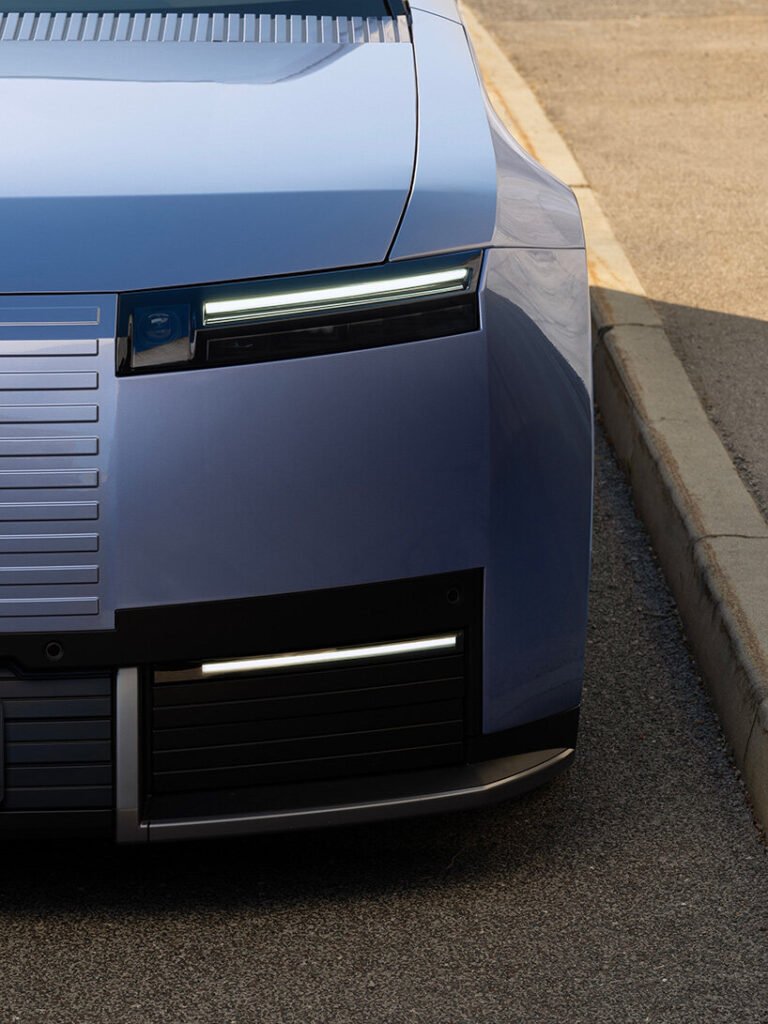
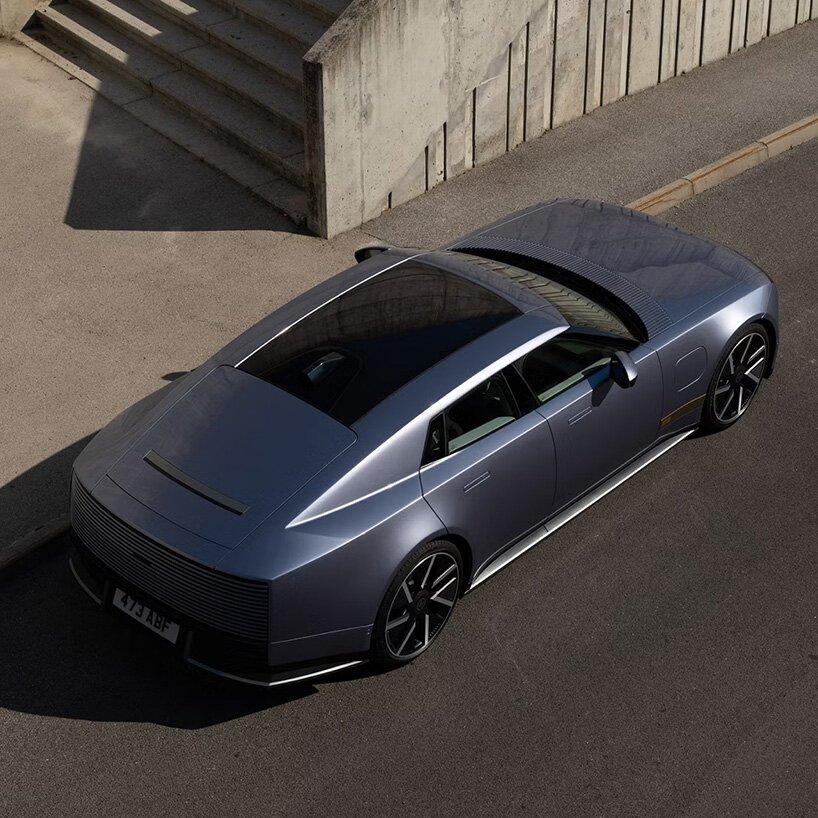
The car is over five metres long, with a ribbed panel instead of a traditional grille, carrying the new Jaguar wordmark. The headlights are just 3.3 inches tall, the thinnest ever fitted to a Jaguar. At the back, there’s no rear window at all. Instead, a roof-mounted camera feeds your rear view.
The rear haunch is formed from what Jaguar calls the “Impossible Panel”. It’s pressed with 2,500 tonnes of force, and the tooling took 1,500 hours to develop. Jaguar has filed more than 360 patents for the car’s design and manufacture.
Inside the Jaguar Type 01
Inside, you get a 24-inch OLED driver display, a 7-inch central touchscreen and a separate screen for rear passengers. The front seats are 12-way adjustable with a hot stone massage function, and the rear seats are heated and cooled. Audio comes through Jaguar’s Immersive Sound System with a Panoramic Soundbar across the dashboard.
It’s a strict four-seater, and the back is snug thanks to the low roofline and high centre console. Boot space is 15.9 cubic feet (about 450 litres), rising to 35.3 cubic feet with the rear seats folded. The frunk is only big enough for an emergency kit.
Jaguar Type 01 vs the Competition
Jaguar is going after buyers who would normally look at a Porsche Taycan, Lucid Air or the new electric Mercedes-AMG GT 4-Door. Here’s how the Type 01 compares on paper, using US starting prices.
| Car | US starting price | Peak power | Acceleration |
| Jaguar Type 01 | $130,500 | 1,015 hp | 0-62 mph in 3.2 s |
| Porsche Taycan Turbo S | $221,400 | 938 hp (overboost) | 0-60 mph in 2.3 s |
| Lucid Air Grand Touring | $114,900 | 819 hp | 0-60 mph in 3.0 s |
| Lucid Air Sapphire | $249,000 | 1,234 hp | 0-60 mph in 1.89 s |
| Mercedes-AMG GT 63 4-Door (EV) | Not announced | 1,153 hp (860 kW) | 0-60 mph in 2.0 s* |
*Mercedes quotes this with a one-foot rollout.
Porsche Taycan
The Taycan is the benchmark. The Turbo S is quicker to 60 mph, but it costs about $90,000 more than the Type 01 and makes less peak power. If you want something with Taycan-level performance for less money, Jaguar has a strong case.
Lucid Air
The Lucid Air Grand Touring is about $15,000 cheaper and Lucid projects up to 512 miles of range, which beats the Jaguar’s anticipated 400 miles EPA. The Air Sapphire is the one to beat for pure speed, but at $249,000 it’s almost double the Jaguar’s price.
Mercedes-AMG GT 4-Door
The new electric AMG GT 4-Door is probably the Type 01’s toughest rival. The GT 63 version makes up to 860 kW (1,153 hp) and charges at up to 600 kW, which is far quicker than the Jaguar’s 350 kW. Mercedes hasn’t announced US pricing yet, so this fight isn’t settled.
Above all of these sit cars like the Bentley Flying Spur and Rolls-Royce Spectre. Jaguar is clearly pitching the Type 01 somewhere between a top-spec Taycan and a Bentley. Whether buyers accept a Jaguar at that level is the real test.
The ‘New’ Jaguar
The rebranding of Jaguar has been controversial from the start. People associated this brand with some of the most iconic models of the last century, including the gorgeous E-Type and the XJ220, and more recently the equally impressive F-Type.
The rebranding, of course, was a result of desperate measures. Jaguar’s sales had been falling for years, and it had to come up with something disruptive, hence the new era. The numbers are brutal. Jaguar sold 161,601 cars in 2019. By 2022, that was down to 61,661, and in 2024 it sold just 33,320.
Interestingly, the problem was Jaguar, not its parent company. JLR posted a £2.5 billion pre-tax profit in the year to March 2025, its best in a decade, thanks mostly to Range Rover and Defender. In the year to March 2024, Defender alone sold about 115,000 units, while the whole Jaguar brand managed about 67,000.
How the Jaguar Rebrand Unfolded
In November 2024, Jaguar stopped selling new cars in the UK, its home market. Days later, on November 19, it released its “Copy Nothing” ad, featuring models in bright colours and not a single car. It racked up more than 22 million views on X, and Elon Musk replied with “Do you sell cars?” On December 2, 2024, Jaguar revealed the Type 00 concept at Miami Art Week, with its new logo and that hot pink paint.
With almost nothing left to sell, registrations collapsed. In April 2025, just 49 new Jaguars were registered in Europe, compared with 1,961 in April 2024. The last car from the old range, the F-Pace, ended production in December 2025. That same month, Gerry McGovern, the design chief behind the rebrand, reportedly left JLR after 21 years.
Jaguar isn’t backing down, though. Managing director Rawdon Glover has been clear about who this car is for: “We don’t anticipate this car being for everyone.” Jaguar would rather have fewer buyers who love it than a lot of buyers who feel nothing.
My Take on the Jaguar Type 01
Here’s the thing. On paper, the Type 01 is seriously impressive. It has more than 1,000 PS, a claimed 450 miles of WLTP range and fast charging, and it undercuts a Taycan Turbo S by a big margin. If it wore a Porsche badge, we’d probably be calling it a bargain.
The problem is the badge, or rather what Jaguar did to it. Asking people to spend £130,000 on a Jaguar is a big jump for a brand whose average US sale is around $70,000 today. And with no rear window, a snug back seat and a design that clearly isn’t for everyone, Jaguar has made this a car you either want badly or don’t want at all.
Just like the Cybertruck, I think that’s exactly the point. Jaguar needed people talking again, and it worked. Whether that talk turns into sales, we’ll find out when deliveries start in 2027. I’ll be watching closely.
What do you think? Is the Type 01 the bold restart Jaguar needed, or has it lost what made a Jaguar a Jaguar? Let me know in the comments.