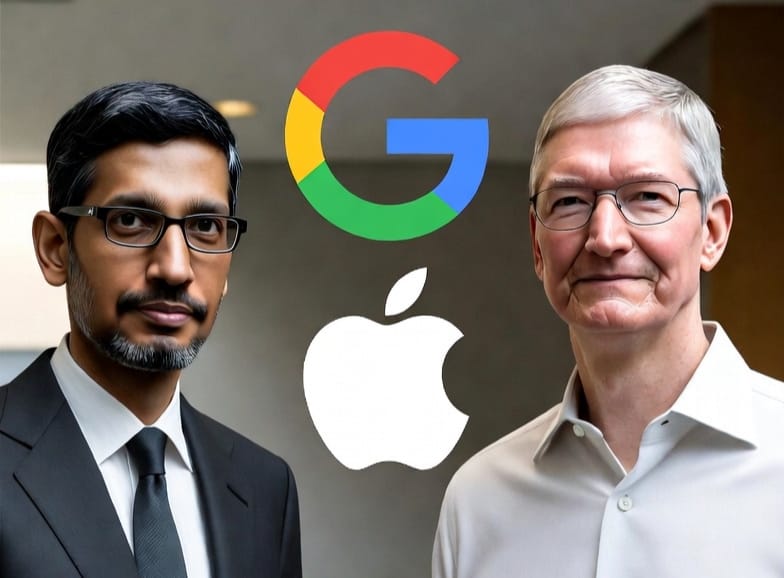
In a move that’s sending shockwaves through the tech world, Apple and Google have announced a multi-year partnership to integrate Google’s Gemini AI models into Apple’s ecosystem, including a major overhaul of Siri. Revealed on January 12, 2026, this collaboration comes after months of speculation and positions Google as a key player in Apple’s AI future. For Apple, it’s a potential lifeline to catch up in the AI race where Siri has long been criticized as outdated. But is Google the real winner here, now influencing AI across both Android and iOS? We break down the deal’s details, its transformative potential for Apple, and why Google might emerge as the dominant force in mobile AI.
The Deal: Gemini Meets Apple Intelligence
After evaluating options from rivals like OpenAI and Anthropic, Apple has chosen Google’s Gemini as the backbone for its next-generation Apple Intelligence features. The multi-year, non-exclusive agreement will see Gemini powering an upgraded Siri—set to launch later in 2026—along with other foundational models for personalized AI experiences. Apple will leverage Google’s cloud infrastructure for training and deployment, ensuring scalability without building everything in-house.
Financial terms weren’t officially disclosed, but reports peg the deal at around $1 billion annually for Apple, granting access to custom Gemini variants tailored for iOS integration. This isn’t Google’s first rodeo with Apple; they already handle default search on Safari for billions—but it deepens their alliance in the high-stakes AI domain. The partnership kicks off with Siri enhancements, promising more contextual understanding, proactive suggestions, and seamless multi-device interactions.
Transforming Apple: From Lackluster AI to Gemini-Fueled Powerhouse
Apple’s AI efforts have faced criticism for lagging behind competitors. Siri, once revolutionary in 2011, now feels clunky compared to Google’s Gemini or OpenAI’s ChatGPT—limited in natural language processing, contextual awareness, and integration depth. Apple Intelligence, rolled out in iOS 19 last year, was a step forward with on-device features like enhanced photo editing and writing tools, but it lacked the generative flair of rivals.
This deal could change everything. By tapping Gemini’s multimodal capabilities (text, image, video processing), Apple can supercharge Siri into a “more personalized” assistant—handling complex queries like “Plan my weekend based on my calendar and weather,” or generating custom images from voice prompts. Expect deeper ecosystem ties: Siri pulling from Apple Music for playlists, or summarizing emails with Gemini’s efficiency. Privacy remains a focus—processing stays on-device where possible, with cloud ops anonymized—but Gemini’s cloud backbone addresses Apple’s scaling hurdles.
For Apple, this accelerates AI rollout without massive R&D spend, potentially closing the gap with Android’s Gemini Nano. It transforms “lackluster” perceptions: Siri could evolve from reactive helper to proactive companion, boosting iPhone 18 sales and retaining users in a market where AI is the new battleground.
Google as the Big Winner: Controlling AI Across Platforms
While Apple gains a quick AI boost, Google emerges as the strategic victor. Gemini already powers Android’s ecosystem (e.g., Pixel 10’s real-time translation), and this deal extends its reach to over 2.2 billion iOS devices—cementing Google as the de facto AI provider for mobile.
Revenue is obvious ($1 billion+ yearly from Apple), but the real prize is data and influence. Training on anonymized Apple interactions could refine Gemini, while Google Cloud gets a prestige client. Antitrust watchers note the irony: Regulators pushed Apple to open up (e.g., DMA), yet this consolidates power with Google, potentially drawing scrutiny. For consumers, it’s win-win: Better Siri without switching ecosystems, but Google’s cross-platform dominance could stifle competition from OpenAI or Anthropic.
Broader Implications: A Unified AI Landscape or Monopoly Risk?
This partnership signals a maturing AI market—collaboration over cutthroat rivalry. For users, expect cross-platform perks: Gemini’s consistency across Android/iOS could ease device switching. But concerns loom: Will Apple’s “walled garden” loosen further? And does Google’s dual control raise monopoly flags, especially post-EU fines?
Verdict: A Smart Move for Apple, Smarter for Google
Apple’s Gemini deal is a pragmatic pivot—transforming its “lackluster” AI into a competitive force and buying time for in-house advancements. Siri 2026 could finally shine, revitalizing Apple’s ecosystem. But Google wins bigger: Revenue, reach, and reinforcement as AI’s mobile kingpin. Consumers get better tech, but at what cost to competition? This could redefine 2026’s AI wars—watch for antitrust ripples. Excited for Gemini Siri, or wary of Google’s grip? Sound off below!