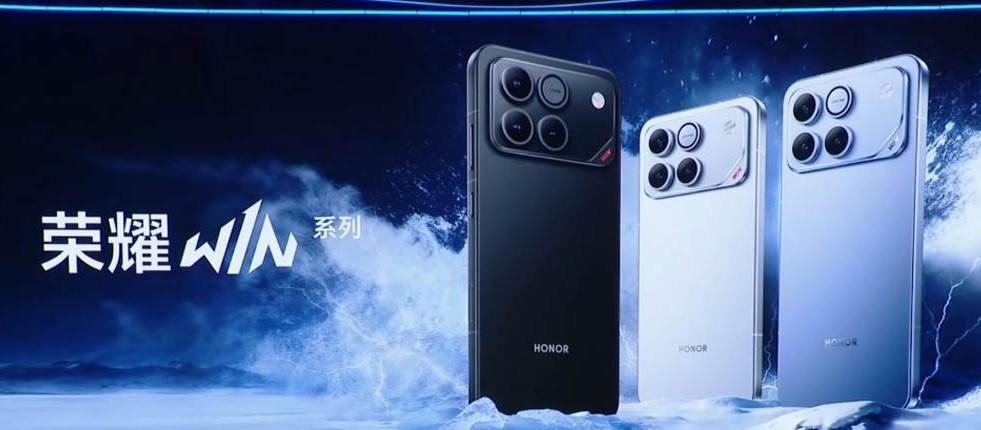
Honor’s latest push into the gaming smartphone arena comes with the Honor Win and Honor Win RT, launched on December 26, 2025, as the brand’s most ambitious e-sports-focused devices yet. Priced at around $700 for the base Win (12GB/256GB) and $850 for the Win RT (16GB/512GB), these phones target mobile gamers and power users craving flagship performance without the premium tag. Available now in China via JD.com and Honor stores, with global rollout expected in Q1 2026 (starting in India and Europe), they boast the world’s first 10,000mAh battery in a smartphone, paired with Snapdragon’s latest silicon and active cooling. But are they worth the hype? We review the duo in the first half, then dive into how Chinese battery tech—like the silicon-carbon anodes powering these beasts—is shattering limits, and what’s next for 2026.
Honor Win and Win RT Review: Unboxing a Battery Monster with Gaming DNA
The Honor Win series isn’t subtle—it’s built for marathon sessions of Genshin Impact or PUBG Mobile, blending raw power with endurance that laughs at power banks. Both models share core DNA but diverge in refinements: the standard Win for value hunters, the RT (Racing Trim) for overclocked thrills.
Design and Build: Sleek Yet Sturdy for On-the-Go Play
At 161.7 x 75.8 x 9.2mm and 228g (Win) / 234g (Win RT), these feel substantial but balanced, with a matte aluminum frame and vegan leather back (in Aurora Green, Midnight Black, or Racing Silver) for grip during intense games. The Win RT adds a built-in active cooling fan—a turbo button activates it for 20% better heat dissipation, keeping temps under 40°C in long sessions. IP65 rating shrugs off sweat and spills, while the side-mounted fingerprint scanner doubles as a gaming trigger.
The massive battery doesn’t bloat the profile much—it’s slimmer than expected, with a horizontal camera bar echoing Pixel aesthetics but with Honor’s starry ring flash. Haptics are tuned for immersive feedback, and the alert slider returns for quick profile swaps. Drawback? No wireless charging, but that’s a fair trade for the capacity.
Display: 185Hz Smoothness for Competitive Edge
Both rock a 6.82-inch 2K OLED (2800 x 1264, ~450ppi) with an insane 185Hz refresh rate (up from 144Hz on rivals)—a first for smartphones, ensuring buttery animations and zero lag in FPS games. LTPO 4.0 dials from 1-185Hz for efficiency, with 4,500 nits peak brightness (HDR10+) and 100% DCI-P3 for vibrant visuals outdoors. Eye-care modes (TÜV certified) reduce strain during night grinds, and the flat edges minimize accidental touches.
The Win RT edges ahead with Q1 gaming chip integration for frame interpolation (up to 120fps in non-native games) and low-latency touch sampling (360Hz). Punch-hole 50MP selfie cam is sharp for streams, but the under-display version on RT minimizes distractions.
Performance: Snapdragon 8 Elite Overkill in Mid-Range Form
Fueled by the Snapdragon 8 Elite (same as OnePlus 15), with 12-16GB LPDDR5X RAM and 256GB-1TB UFS 4.0 storage (expandable via NM card), these crush benchmarks: AnTuTu ~2.8M, Geekbench single/multi ~3,200/11,000—40% faster than the Dimensity 9300+ in last-gen gaming phones. MagicOS 9 (Android 15) is fluid, with AI boosters like GPU Turbo X for sustained 60fps+ in Honkai: Star Rail.
The RT’s fan + vapor chamber keeps it cool—X users report no throttling after 2-hour sessions. Gaming suite includes screen recording, performance overlays, and haptic tweaks. Drawbacks? Bloatware in MagicOS, though 4 years of OS updates soften it.
Camera: Versatile for Casual Creators
Triple rear: 50MP main (Sony IMX906, f/1.9, OIS) for detailed shots, 50MP telephoto (2.5x optical, 50x digital), and 12MP ultrawide (f/2.2, 120°). AI scene optimization shines in low-light, with 4K/60fps video and slow-mo at 960fps. Front 50MP handles vlogs well.
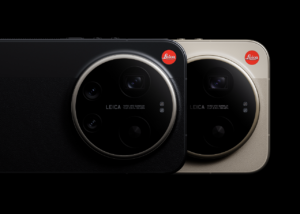
It’s not Leica-level (like Xiaomi 17), but solid for social—colors pop, portraits bokeh naturally. Macro mode from ultrawide is fun for close-ups.
Battery: The 10,000mAh Game-Changer
Here’s the headline: 10,000mAh silicon-carbon battery lasts 3 days light use or 10+ hours gaming—unheard of. 100W wired charges full in 35 mins; 66W wireless in 50. Real-world: X threads rave about forgetting chargers.
Chinese Batteries Breaking Barriers: Silicon-Carbon and Beyond
Chinese phones like the Honor Win series exemplify how silicon-carbon anodes are revolutionizing capacity—packing 20-30% more energy than lithium-ion without bloating size. Xiaomi 17 (7,500mAh), OnePlus 15 (7,300mAh), and now Honor’s 10,000mAh push endurance to multi-day levels, with 100W+ charging making “battery anxiety” obsolete.
Why China leads? R&D focus: Huawei pioneered silicon-carbon in 2023; now it’s standard for flagships. Barriers broken: Higher density (up to 1,000Wh/L vs. 750Wh/L lithium), better longevity (1,500+ cycles), and safety (less expansion/degradation).
2026 Advancements: Bigger, Faster, Smarter Batteries Incoming
Yes, 2026 promises more:
- Silicon-Carbon Evolution: Samsung tests for Galaxy S26 (potential 5,500mAh+), Apple rumored for iPhone 18—global adoption spikes 50%.
- Solid-State Breakthroughs: Toyota/Idemitsu prototypes hit 1,500km EV range; mobile versions (Samsung SDI) promise 2x density by late 2026.
- Graphene/Sodium-Ion Hybrids: Xiaomi pilots graphene for 200W charging (full in 10 mins); sodium-ion (cheaper, eco-friendly) in budget phones.
- Capacity Ceilings: 12,000mAh+ in gaming phones; AI-optimized discharge for 4-day life.
Challenges? Costs up 20% amid shortages, but yields improve. Chinese dominance continues—expect Huawei Mate 80 with 11,000mAh. The battery race heats up; 2026 could make “charging daily” a relic.
Verdict: The Honor Win/Win RT are endurance kings—buy if gaming’s your jam (RT for fan-cooled edge). At $700-850, they’re mid-range steals. Batteries? China’s leading the charge—2026 brings the revolution global. Marathon phone or quick charger—which wins for you? Comment below!