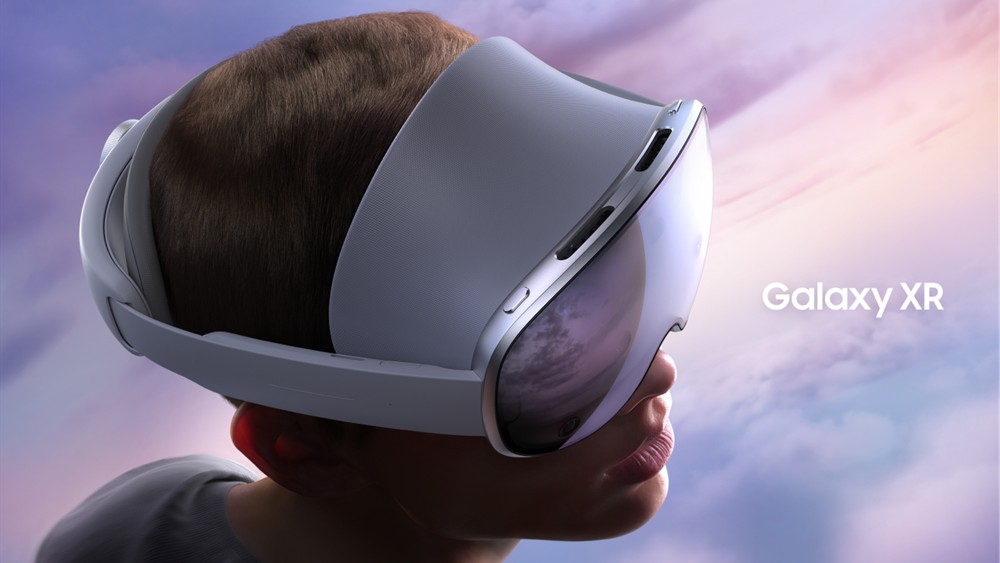
Samsung’s long-teased foray into mixed reality finally materialized on October 21, 2025, with the Galaxy XR headset—a $1,799 powerhouse running Google’s fresh Android XR OS. Born from Project Moohan (a nod to Korean for “infinite possibilities”), this headset teams up Qualcomm’s Snapdragon muscle with Gemini AI smarts, aiming to democratize XR for creators, gamers, and everyday explorers. Available now in the US and South Korea via Samsung.com and Experience Stores, it’s the first device on Android XR, blending VR immersion with AR passthrough in a lighter, more affordable package than rivals. But at half the Vision Pro’s price, does it pack superior tech or just savvy value? We dissect the features, specs, pricing, and stack it against Apple’s $3,499 titan to see if Samsung’s play is a knockout punch.
Key Features: AI-Driven Immersion Meets Android Ecosystem
The Galaxy XR isn’t just hardware—it’s a portal to Google’s XR vision, emphasizing seamless blending of digital and physical worlds. Powered by the Snapdragon XR2+ Gen 2 chipset (with 16GB RAM and 256GB storage), it handles demanding tasks like 8K video playback and real-time AI processing without breaking a sweat. The dual Micro-OLED displays (3,552 x 3,840 per eye, up to 90Hz refresh, 29 million pixels total) deliver crisp visuals with a wide 109° horizontal / 100° vertical field of view—ideal for expansive gaming or virtual workspaces. Color accuracy hits 96% DCI-P3, supporting HDR10 and Dolby Atmos for cinematic experiences.
Tracking is tri-modal: hand gestures for intuitive navigation, eye-tracking (via four dedicated cameras) for foveated rendering (sharper focus where you look, saving power), and voice commands powered by Gemini AI. Six world-facing cameras enable high-res color passthrough for AR overlays, while a depth sensor and five IMUs ensure precise 6DoF head tracking. Audio comes from two-way speakers (woofer + tweeter) and a six-mic beamforming array for spatial sound and clear calls. Unique perks include iris recognition for secure unlocking and auto-spatialization—Gemini infers depth from 2D photos/videos to create 3D versions on the fly.
Software steals the show with Android XR: sideload standard Android apps (e.g., Netflix, Spotify) alongside XR natives like immersive Google Maps (3D navigation with Circle to Search on real-world objects) and spatial YouTube (180°/360° videos, resizable cinema screens). Multitasking lets you resize/organize windows in a vast private space—pair with a keyboard/mouse or link to a PC for desktop mode. Gaming shines with titles like NFL PRO ERA and Vacation Simulator, plus Adobe’s Project Pulsar for XR video editing. Battery? A tethered 302g pack offers 2 hours general use or 2.5 hours video, swappable while charging—practical for long sessions but less sleek than integrated designs.
At 545g (headset only), the lightweight frame distributes weight across the forehead and crown, with adjustable IPD (54-70mm) and optional prescription inserts. Connectivity includes Wi-Fi 7 and Bluetooth 5.4 for lag-free streaming.
Pricing: Value Play with Perks
The Galaxy XR starts at $1,799 for the 256GB Wi-Fi model—$1,700 less than the Vision Pro—making high-end XR accessible without enterprise markups. Add $249 for the optional 6DoF controllers (with joysticks, triggers, and face buttons) and another $249 for the carrying case (fits headset + battery). Financing eases the sting at $149/month over 12 months. Preorders until year-end snag the free “Explorer Pack” (valued at $1,000+): 12 months of Google AI Pro, YouTube Premium, Google Play Pass, plus sports passes (NBA League Pass in US) and exclusive XR content like Adobe Pulsar and Calm meditations. No cellular option yet, but future updates are teased.
Head-to-Head: Galaxy XR vs. Apple Vision Pro – Better Tech or Just Better Deal?
Samsung’s Galaxy XR directly challenges the Vision Pro as a “prosumer” alternative: lighter, cheaper, and more open, but with trade-offs in polish and ecosystem lock-in. Both rock Micro-OLED displays for stunning clarity, but Samsung’s wider FoV (109° vs. Vision Pro’s 100°) feels more immersive for gaming and spatial computing. The Snapdragon XR2+ Gen 2 edges Apple’s M2 in raw GPU power for Android apps and ray-tracing, while Gemini’s agentic AI (e.g., real-time object queries in passthrough) rivals Apple Intelligence but integrates broader services like YouTube spatialization.
Design-wise, the Galaxy XR’s 545g weight and tethered battery shave heft off the head (vs. Vision Pro’s 600-650g integrated setup), reducing fatigue for extended use— a clear win for comfort. Passthrough is vibrant on both, but Samsung’s controllers add precision for gaming (Vision Pro relies on eye/hand tracking alone). Battery life is comparable (2-2.5 hours), but Samsung’s swappability edges out Apple’s non-removable pack.
Software is the divide: Android XR’s app compatibility (millions of Android titles) and Gemini’s cross-service smarts make it more versatile for Android users, while Vision Pro’s visionOS offers tighter iOS/macOS synergy and pro apps like Final Cut. Samsung lacks the Vision Pro’s ultra-precise eye-tracking for foveation but compensates with hand/voice fluidity.
| Feature | Samsung Galaxy XR | Apple Vision Pro |
|---|---|---|
| Price (Base) | $1,799 (256GB) | $3,499 (256GB) |
| Weight | 545g (headset) + 302g battery | 600-650g (integrated) |
| Displays | Dual Micro-OLED (3,552×3,840/eye, 90Hz, 109° H FoV) | Dual Micro-OLED (4K+/eye, 100Hz, 100° H FoV) |
| Processor | Snapdragon XR2+ Gen 2 (16GB RAM) | Apple M2 (16GB unified memory) |
| Battery Life | 2-2.5 hrs (tethered, swappable) | ~2 hrs (integrated) |
| Tracking/Controls | Hand/eye/voice + optional controllers | Eye/hand/voice (no controllers) |
| OS/AI | Android XR + Gemini | visionOS + Apple Intelligence |
| Unique Perks | Android app compatibility, spatial YouTube, Explorer Pack | Seamless Apple ecosystem, pro creative tools |
| Availability | US/South Korea now; global soon | Worldwide since Feb 2024 |
Verdict: Smarter Value, But Not Straight-Up Superior Tech
The Galaxy XR isn’t a tech demolisher—Vision Pro still leads in build finesse, eye-tracking accuracy, and closed-ecosystem magic for Apple faithful. But at $1,799 with broader app access, lighter wear, and Gemini’s playful AI (think querying your room’s objects mid-passthrough), it’s the better option for most: gamers craving controllers, Android devs, or budget-conscious creators eyeing Adobe XR tools. Samsung’s tethered battery irks purists, and launch-day app library lags Vision Pro’s maturity, but the price delta and open ethos tip the scales. If you’re not all-in on iOS, Galaxy XR is the 2025 XR gateway—grab it with the Explorer Pack before perks vanish. Vision Pro for prestige; Samsung for smarts.




1 thought on “Samsung Galaxy XR: Cheaper & Better AI Than Apple’s Vision Pro”